






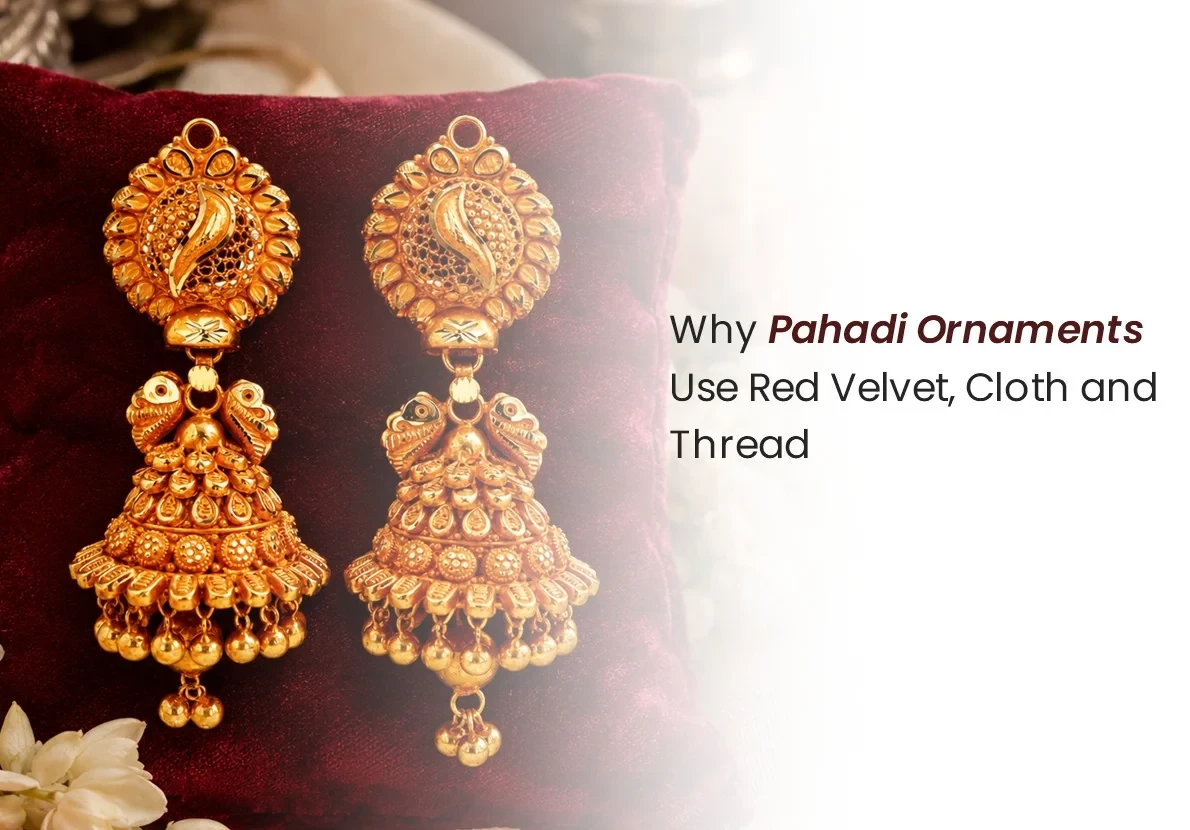
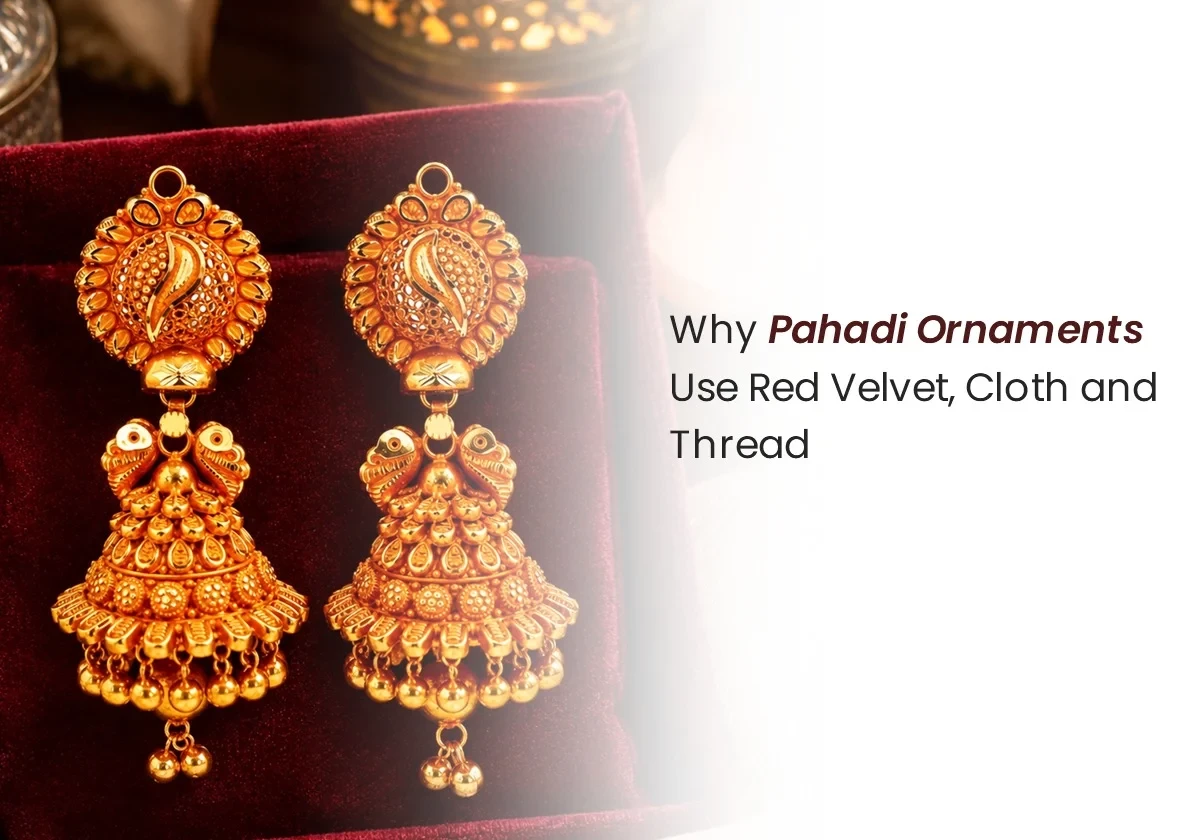
Look closely at a Galobandh worn by a hill bride. You will see small gold squares sitting on a deep red band. Now look at the Pauchi on her wrist. You will find gold beads held on soft cord. This mix of metal and fabric is not an accident. Each part has a job, and each part has a meaning. In this guide, we explain why Pahadi traditional jewellery pairs gold with red velvet, cloth, and thread. We also share simple care tips so these pieces last for the next generation.
Why Red Is the Colour of Hill Weddings
The red isn’t only there for looks. In hill homes, the colour behind Pahadi traditional jewellery is the same colour used in rituals, clothes, and prayers. Here is where that link comes from.
A sign of married life: Red stands for suhaag, or a happy married life, in many Indian homes. Married women in the hills wear red-backed necklaces like the Galobandh at festivals and family functions.
The Pichora connection: Women once printed red dots on the Kumaoni Rangwali Pichora using colour made from dried, crushed rose petals, notes INTACH’s heritage archive. Red fabric in jewellery repeats that ritual colour.
Aipan uses red too: Kumaoni Aipan art is drawn for weddings and pujas in white rice paste on a red geru (ochre) base. It received a GI tag in 2023, as per AIACA.
Gold shines brighter on red: Yellow gold looks warmer against a dark red base. The contrast makes small gold plates look bigger and bolder, even when the actual gold weight is modest.
So the red band carries the same blessing as the bride’s red ghagra and the red Aipan at her door.
Why Cloth and Velvet Make the Base
The fabric base solves real problems of hill life. It makes heavy ornaments easier to wear, easier to afford, and easier to fit.
Comfort in Cold Weather
Soft on the skin: Metal turns icy in hill winters. A velvet or cloth lining sits between the gold and the neck, so the necklace feels warm and gentle all day.
No scratches: Sharp metal edges can rub the skin during long rituals. The padded band keeps those edges away from the body. This matters when a bride wears it for many hours.
Lighter and Easier on the Budget
Less metal, same look: A Galobandh uses separate gold plates fixed onto a red cloth belt with thread, not one solid gold collar. This keeps the piece lighter and the gold weight easier for families to manage.
Flexible fit: Separate plates on fabric bend with the neck. This flexible build is a key feature of Pahadi jewellery design, and it lets one piece sit well on different body shapes.
The fabric does the hard work, so the gold can simply shine.
The Quiet Job of Thread
Thread may look like the smallest part of the ornament. Yet it holds the whole design together and keeps it in use for decades.
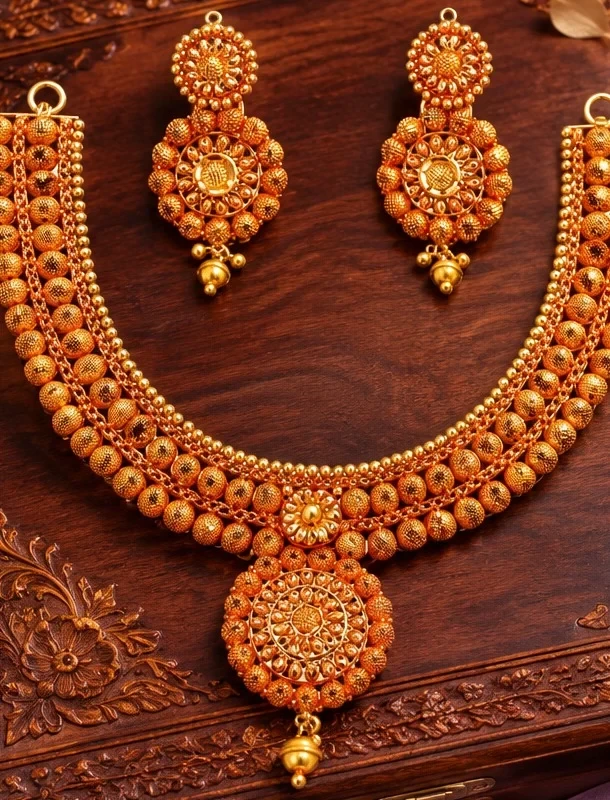
Pauchi beads on cord: The Pauchi, or Pahunchi, is a wrist ornament with rows of gold beads fixed on a cloth or thread base. Thread keeps each bead in place without heavy metal links.
Tie-back closures: Many pieces of Kumaoni jewellery close with a thread tie, called a dori, instead of a clasp. A dori adjusts easily, so a mother’s necklace can later fit her daughter.
Easy to repair: Thread wears out, but gold does not. A skilled karigar (craftsman) can replace a worn cord while the original gold plates and beads stay untouched.
Ask before you buy: When you shop at a heritage store like Battulaal Prayag Narayan Jewels, ask how the fabric base is stitched and whether the thread can be changed later.
Good thread work is what turns one ornament into a family heirloom.
What the Numbers Say About Indian Jewellery Today
Pahadi jewellery is part of a much bigger Indian jewellery story. Recent figures show where gold and silver are heading.
Gold stays steady: India’s gold jewellery exports stayed almost flat at US$ 11.36 billion in FY 2025-26, as per the Gem and Jewellery Export Promotion Council (GJEPC).
Silver is growing: Silver jewellery exports rose 17.43% to US$ 596.41 million between April and September 2025, GJEPC reported. This matters because many hill ornaments are made in silver.
Silver HUID is here: HUID-based hallmarking for silver began on 1 September 2025. At that time, 230 BIS-recognised centres across 87 districts were testing silver.
Quick uptake: Over 17 lakh silver articles got HUID marks in the first three months. Nearly 90% of them were in the 925 and 800 purity grades, says GJEPC.
Kirit Bhansali, Chairman of GJEPC, called FY 2025-26 “a phase of structural reset for the Indian gem and jewellery industry.” For heritage buyers, this is a good time to ask about purity and clear pricing.
How to Care for Cloth-Based Ornaments
Fabric needs a little more care than plain metal. These simple habits will keep your Uttarakhand traditional jewellery looking fresh.
Store it flat: Keep cloth-based necklaces flat in a soft box. Hanging them for months can stretch the band and loosen the stitches holding the gold plates.
Keep away from damp: Hill monsoons bring heavy moisture. Add a silica gel pack to the box, since damp velvet can fade, smell, or weaken the thread over time.
Perfume first, jewellery last: Spray perfume and apply lotion before you wear the piece. Chemicals can stain red velvet and dull the shine on gold.
Check purity and thread: Verify the HUID on any hallmarked piece with the BIS CARE app. You can also take older pieces to Battulaal Prayag Narayan Jewels to ask about restringing.
A few minutes of care each season can add many years to an heirloom.
Keeping an Old Craft Alive
Red velvet, cloth, and thread are not filler. They bring comfort, flexibility, easy repair, and a colour full of blessings. That is why Pahadi traditional jewellery still looks and feels the way it did generations ago. If you want a piece made in these old ways, explore the Uttarakhandi collection at Battulaal Prayag Narayan Jewels and ask how each ornament is made.
FAQs
1. Why is the Galobandh made on a red band?
The red band links the necklace to married life and ritual colour in hill homes. It also makes the gold plates stand out and keeps metal off the skin. That is why the band is usually red velvet or cloth.
2. Can the thread on an old Pauchi be replaced?
Yes. Thread wears out with time, but the gold beads stay strong. A skilled craftsman can restring the piece with new cord while keeping every original bead. Ask your jeweller to check the metal and stitching before the work begins.
3. Are fabric-based ornaments only made in red?
Red is the classic choice because of its link with weddings and blessings. Today, some jewellers also offer maroon, green, or black bases to match bridal and festive outfits. The gold work and the traditional shape usually stay the same.
4. How do I check if hill ornaments are pure?
Look for the BIS hallmark, the purity grade, and the six-digit HUID code. You can verify the HUID on the BIS CARE app. Since September 2025, hallmarked silver pieces must also carry an HUID code. Always keep the bill safe.
5. How should I store a velvet-backed necklace?
Store it flat in a soft, dry box with a silica gel pack. Avoid hanging it for long periods. Keep it away from perfume and damp air, and check the stitching and thread once a year for any loose spots.


 Resend Code