





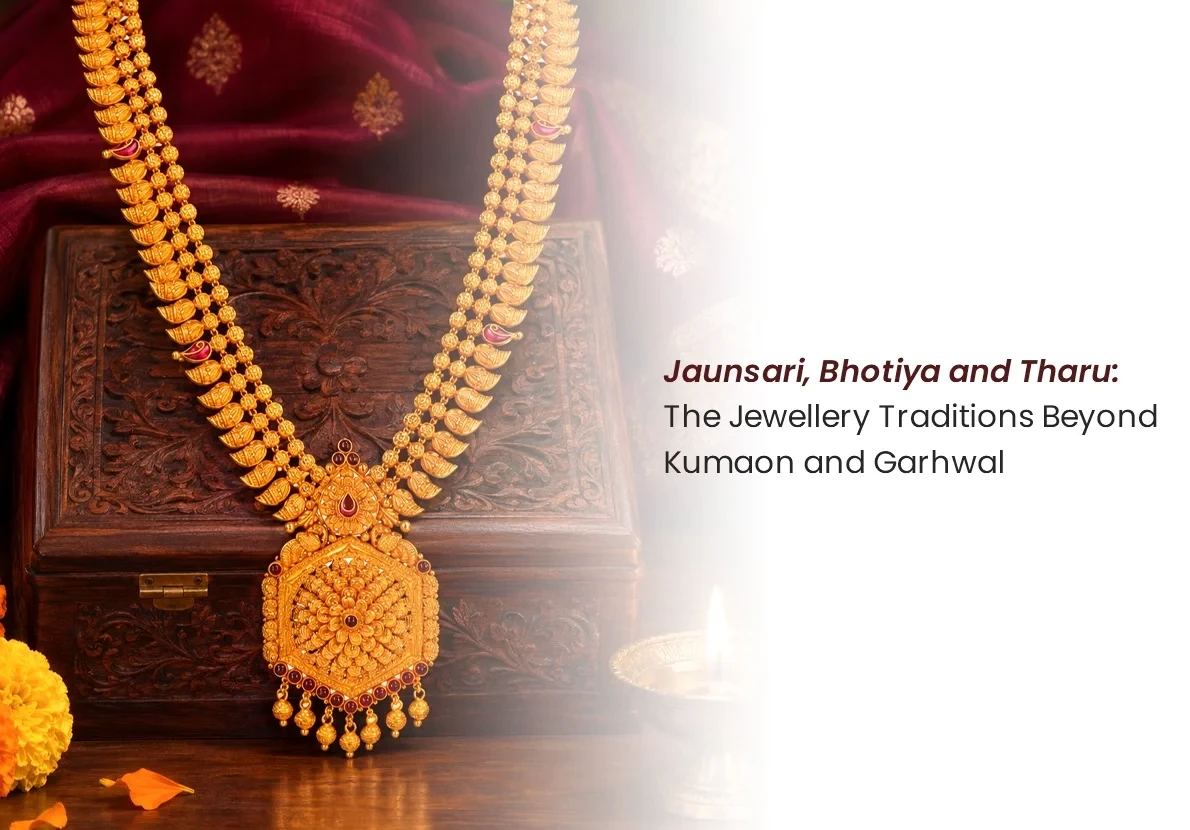
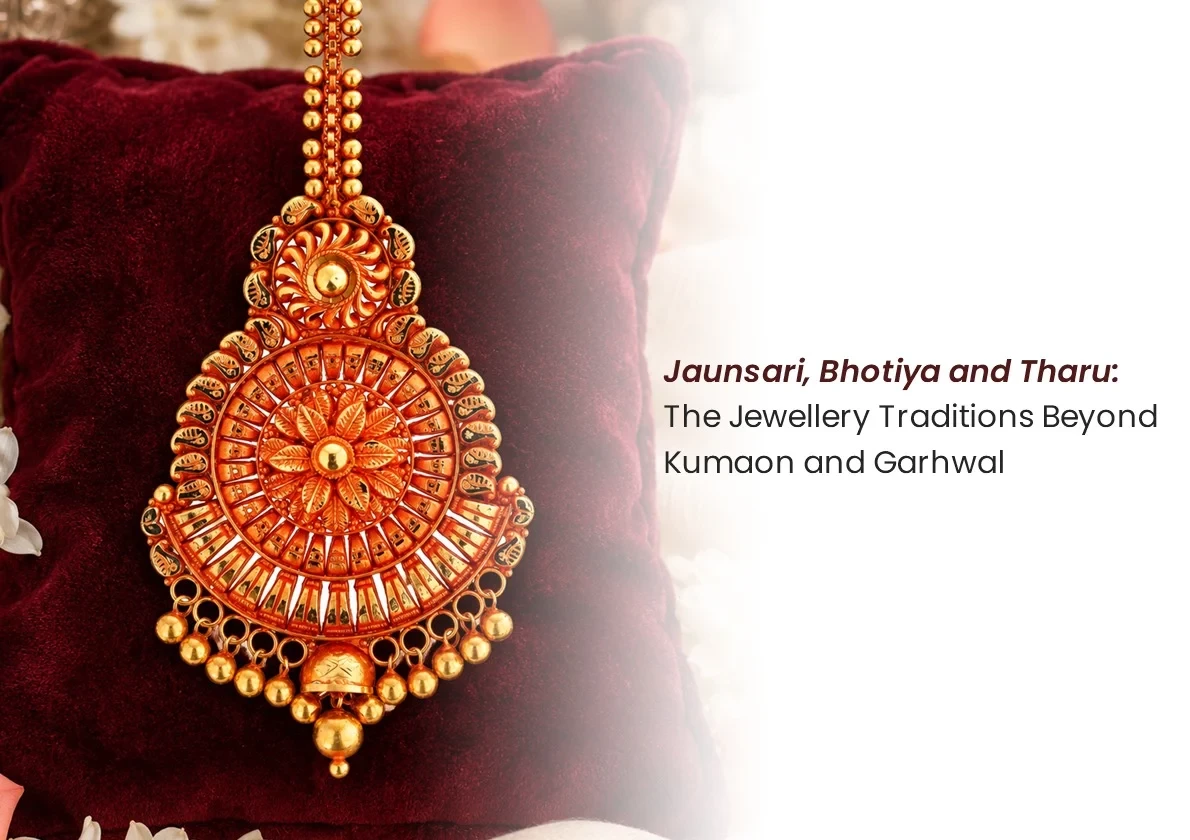
Most talk about hill jewellery stops at Kumaon and Garhwal. That leaves out a big part of the story. Uttarakhand is also home to tribal groups with their own ornaments, names and customs. Many of these pieces are rarely seen outside their villages.
This guide looks at three of them: the Jaunsari of Dehradun, the Bhotiya of the high valleys and the Tharu of the Terai. Each group adds something new to Pahadi traditional jewellery Read on to learn what they wear, why it matters and what is changing.
Uttarakhand’s Tribes in Numbers
Uttarakhand has five Scheduled Tribes: the Tharu, Jaunsari, Buksa, Bhotiya and Raji. Each one shapes Pahadi traditional jewellery in its own way, yet few buyers know their names. These numbers show the size of each community.
Small share, big culture: Census 2011 counted 2,91,903 tribal people in Uttarakhand. That is about 2.89% of the state’s population, yet their ornament traditions are very varied.
Tharu lead the count: The Census recorded 91,342 Tharu people. Most live in Udham Singh Nagar, in places like Khatima, Sitarganj and Nanakmatta in the Terai belt.
Jaunsari close behind: The Census lists 88,664 Jaunsari people. Of these, 86,516 live in Dehradun district, mainly in the Jaunsar-Bawar area near the Himachal border.
Bhotiya live highest: The Census counted 39,106 Bhotiya people. They live in the high valleys of Pithoragarh, Chamoli and Uttarkashi, close to the Tibet border.
The numbers are only part of the story. The jewellery tells the rest.
Jaunsari Jewellery: Gold Flowers and Shared Silver
The Jaunsari wear a mix of gold and silver, and their ornaments carry strong social meaning. Here are the pieces and customs worth knowing.
Pieces You Will See
Kaanphool earrings: These are gold earrings carved with flower patterns. The JD Institute of Fashion Technology notes they are most commonly worn by Jaunsari women.
Hansuli necklace: This is a stiff, collar-like neck ring. Jaunsari women share this design with Garhwali, Kumaoni and Bhotiya women, which shows how forms travel across the hills.
A lending custom: In many villages, women lend their Hansuli to those who cannot afford one. Outlook Traveller recorded this practice. It shows jewellery as a shared community asset.
A New Rule From 2025
Three pieces only: In October 2025, the joint panchayat of Kandhar and Indrani villages in Jaunsar limited women to a nose ring, earrings and a mangalsutra at weddings.
Why it happened: Village elders said high gold prices were creating peer pressure on families. The Tribune reported a fine of Rs 50,000 for anyone breaking the rule.
This rule shows how closely jewellery is tied to status and money in Jaunsar.
Bhotiya Jewellery: Shaped by Old Trade Routes
The Bhotiya were traders and herders whose routes ran close to Tibet. Their ornaments carry signs of that border life.
Seven groups, many valleys: Sahapedia lists seven Bhotiya groups, including the Johari, Darmi, Byansi and Jadh. They settled in valleys such as Johar, Darma, Mana and Niti.
Coral and turquoise: Jadh Bhotiya women wear a kanthi with a necklace of coral and turquoise stones. These bright stones set the look apart from most Kumaoni jewellery in the lower hills.
Skilled hands: Bhotiya women were expert weavers of wool while the men handled trade. Today, festival dress still pairs hand-woven woollens with traditional ornaments.
Still on display: At the 17th Johar Mahotsav in Haldwani in October 2026, Shauka women from Pithoragarh appeared in traditional dress and jewellery, as photographed by IANS.
For the Bhotiya, jewellery is a living link to their trading past.
Tharu Jewellery: A Head-to-Toe Silver Set
The Tharu live in the warm Terai plains, far from the snow. A 2018 study by researchers at G.B. Pant University, Pantnagar, recorded 19 Tharu ornaments, all made of silver.
Head and Neck
Ghunghat: This light, flexible silver forehead piece is about half a metre long. It is fixed to the headgear and is mostly worn during festivals.
Coin necklaces: The Dulari uses 25 paisa coins, and the Khuthala uses 50 paisa coins. The study notes that such coin necklaces once showed a family’s economic status.
Hands, Waist and Feet
Paunchi: Diamond-shaped silver beads are stitched onto black or red velvet. The band is tied to the wrist with thread, much like the Pauchi worn in the hills.
Kaidhuni: This is a silver waist belt with three to five chains. Tharu women wear it on special occasions over the ghaghara, their long traditional skirt.
Dagade: This toe ring is made of three small rings joined together. It completes a set that covers the body from the forehead to the toes.
The same study also noted a sad fact. Some poor families had sold their jewellery to meet basic needs.
What These Traditions Share
These three regions are very different, but they share a lot and with the wider world of Pahadi jewellery.
Silver leads daily wear: The Tharu set recorded in 2018 is fully silver. Gold shows up in special pieces, such as the Jaunsari Kaanphool earrings with their flower carvings.
Shared shapes: The Hansuli, the nose ring and the wrist band appear in many communities. This overlap gives Uttarakhand traditional jewellery its strong family likeness.
Status and meaning: Coin necklaces, wedding rules and borrowed Hansulis all point the same way. In these communities, jewellery is about identity and belonging, not only looks.
A call for recognition: At GJEPC’s Crafts Pavilion in 2026, Gunjan Krishna, IAS, said, “I feel the world has not yet been fully exposed to this diversity.”
Tribal ornaments bring exactly that diversity to the hill story.
Bringing These Ideas Into Modern Pieces
Many buyers today want jewellery with real regional meaning. These simple steps can help.
Ask about the story: Ask where a design comes from. A good jeweller should explain its name, the region it belongs to and the metal it was first made in.
Check purity: For gold, look for the BIS hallmark and its HUID code. For silver, ask for the 925 stamp, since many tribal designs began in silver.
Choose meaning over trend: A Pahadi jewellery design inspired by the Hansuli or Paunchi can be worn every day and still honour where it came from.
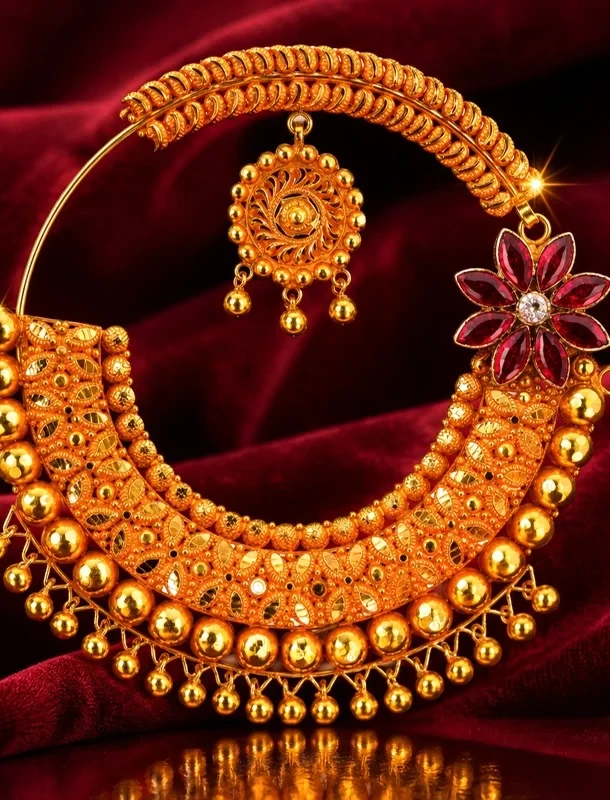
Talk to specialists: Battulaal Prayag Narayan Jewels works with traditional hill forms such as the Nath, Guliband and Pauchi, and can guide you on weight and purity.
Asking the right questions helps you buy with confidence.
Keeping Tribal Jewellery Traditions Alive
Kumaon and Garhwal are only part of the picture. The Jaunsari, Bhotiya and Tharu keep their own forms alive, from coral necklaces to coin chains. Knowing about them makes Pahadi traditional jewellery richer and easier to value. At Battulaal Prayag Narayan Jewels you can explore heritage pieces and ask about weight, purity and design history. Visit the showroom or browse online to find jewellery with real roots.
FAQs
1. Which are the main tribes of Uttarakhand?
Uttarakhand has five Scheduled Tribes: Tharu, Jaunsari, Buksa, Bhotiya and Raji. Census 2011 counted 2,91,903 tribal people, about 2.89% of the state. The Tharu are the largest group, followed closely by the Jaunsari, who mostly live in western Dehradun district.
2. What jewellery do Tharu women wear?
Tharu women traditionally wear a full silver set. A 2018 Pantnagar study recorded 19 ornaments, including the Ghunghat forehead piece, coin necklaces, the Paunchi wrist band, the Kaidhuni waist belt and Dagade toe rings. Each one has its own place on the body.
3. Why do Bhotiya ornaments use coral and turquoise?
The Bhotiya lived in high valleys near Tibet and worked as traders and herders. Jadh Bhotiya women wear necklaces of coral and turquoise with the kanthi. These stones are common across Himalayan cultures, and old trade links likely explain their use.
4. What is the Jaunsari three-jewellery rule?
In October 2025, the joint panchayat of Kandhar and Indrani villages in Jaunsar limited women to a nose ring, earrings and a mangalsutra at weddings. Elders cited high gold prices and peer pressure. Anyone breaking the rule faces a reported Rs 50,000 fine.
5. Can I buy hill jewellery inspired by these traditions from Battulaal?
Yes. Battulaal Prayag Narayan Jewels offers traditional hill pieces like the Nath, Guliband, Pauchi and Jhumki in hallmarked gold. You can ask the team about custom designs inspired by forms such as the Hansuli, and about weight, purity and pricing.


 Resend Code