





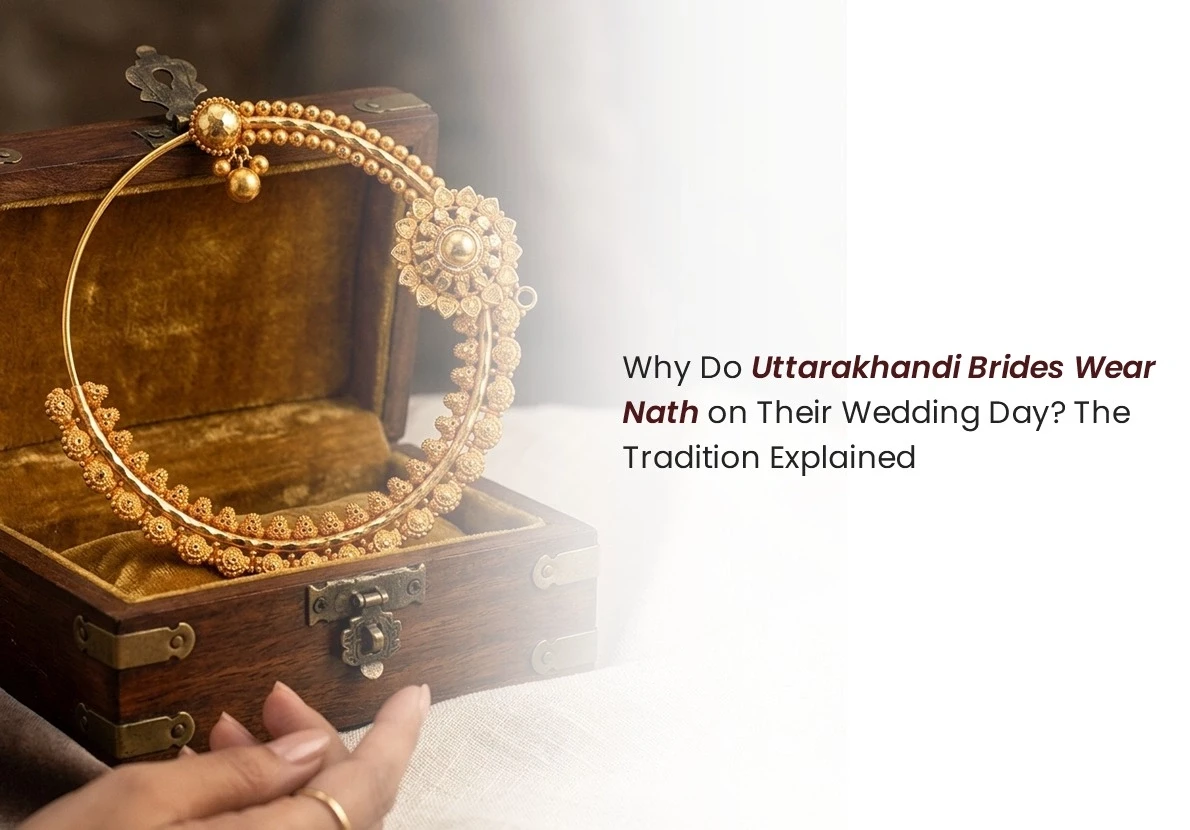
For an Uttarakhandi bride, wedding jewellery is not simply about looking beautiful. It is a way of carrying family memories, regional identity, cultural pride, and tradition into a new chapter of life. Among all the ornaments worn by brides in Uttarakhand, the large gold Nath holds a particularly special place. So, why do Uttarakhandi brides wear a Nath on their wedding day? The answer lies in its deep cultural importance, its connection with auspicious occasions, and its role as a distinctive symbol of Pahadi bridal identity. In Garhwal, Kumaon, and other parts of Uttarakhand, the Nath has evolved into an iconic bridal ornament, with different communities and regions developing their own styles and interpretations. For families looking to preserve this heritage through authentic craftsmanship, Battulaal Prayag Narayan Jewels represents a trusted destination for traditional Uttarakhandi jewellery.
Table of Contents
- Why Is the Nath Important in Uttarakhandi Weddings?
- What Does the Nath Symbolise for a Pahadi Bride?
- How Are Garhwali and Kumaoni Nath Designs Different?
- How Is the Nath Worn and Styled on the Wedding Day?
- What Should You Consider When Choosing a Traditional Nath?
- Why Choose Battulaal Prayag Narayan Jewels for Your Bridal Nath?
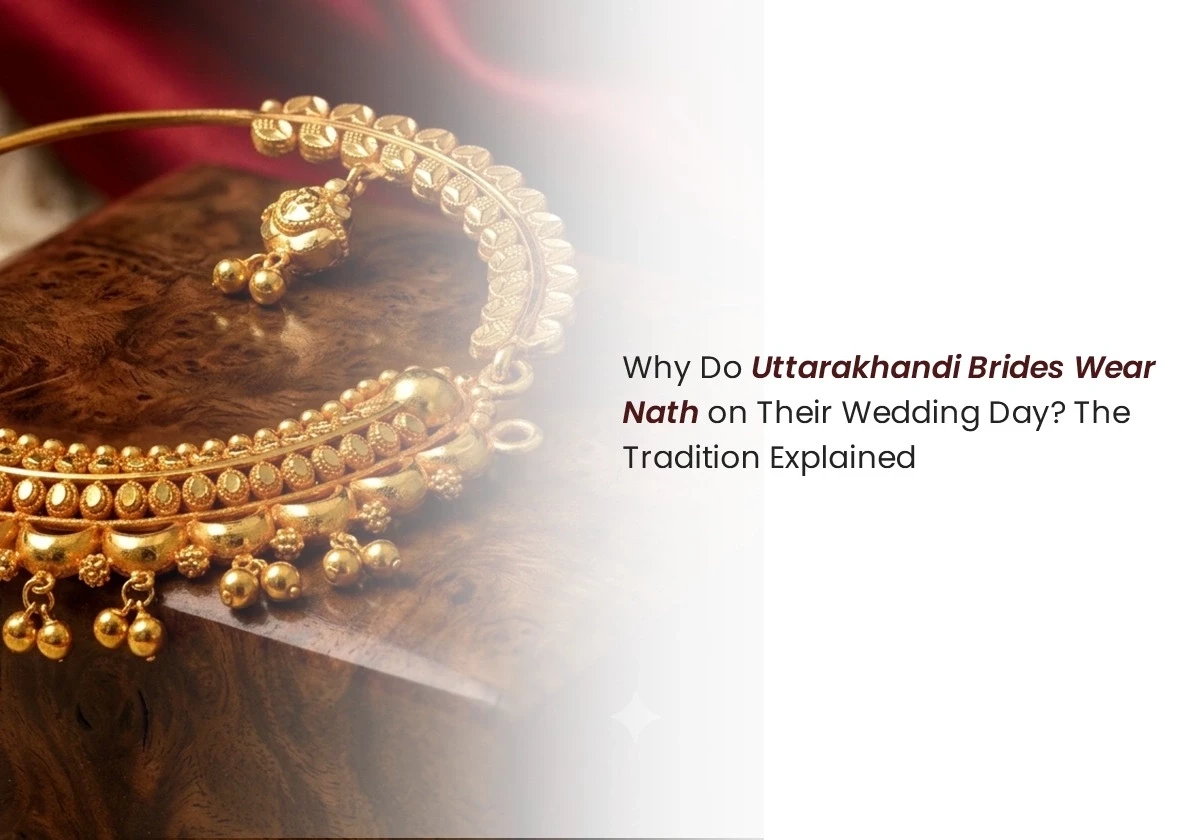
Why Is the Nath Important in Uttarakhandi Weddings?
Have you ever noticed how a Pahadi bride's Nath often becomes the first piece of jewellery people notice? There is a reason for that. The traditional Uttarakhandi Nath is much more than an attractive nose ornament. It represents a connection to the cultural traditions of the Himalayan region and is strongly associated with weddings, festivals, family celebrations, and other auspicious occasions.
The Government of Uttarakhand's Nainital district website notes that married women traditionally wear large golden nose rings called Nath on special occasions. This provides an important official reference for understanding the ornament's place in regional cultural practices. [1]
Why does the Nath hold such importance?
It represents regional identity: The Nath immediately creates a visual connection with Uttarakhand's cultural heritage, particularly the distinctive traditions of Garhwal and Kumaon.
It completes the bridal appearance: Traditional bridal attire often feels incomplete without the prominent Nath, which adds character and cultural richness to the overall ensemble.
It marks an auspicious occasion: The ornament is closely associated with weddings and important family celebrations, making it particularly meaningful when worn by brides.
It connects generations: A Nath may be purchased for a bride, gifted by relatives, or preserved as family jewellery, allowing traditions to continue across generations.
It showcases craftsmanship: Large traditional Naths provide skilled goldsmiths with space to demonstrate intricate metalwork, decorative detailing, and regional design influences.
A lesser-known aspect of Uttarakhand's wedding traditions is that the Nath itself may be part of a specific ceremonial sequence. A description of Kumaoni and Garhwali marriage rites records a Nath ceremony in which the ornament is presented to the bride at an auspicious time. [2]
This means the Nath is not merely something the bride puts on because it matches her outfit. In some traditional wedding practices, its presentation has its own ceremonial importance.
This is also why choosing a Nath is often a deeply personal decision for the family. When the goal is to find a traditional design that respects Uttarakhand's jewellery heritage, Battulaal Prayag Narayan Jewels can help families explore authentic bridal jewellery suited to their cultural preferences.
What Does the Nath Symbolise for a Pahadi Bride?
So, what does a Nath actually represent?
The answer can vary from one family or community to another. However, the ornament is commonly understood through several overlapping ideas, including femininity, marital identity, family pride, prosperity, and cultural belonging.
Traditional jewellery across India often communicates more than wealth or beauty. Jewellery can indicate community, social identity, marital status, and important life transitions. Uttarakhand's Nath follows this broader Indian tradition while developing a distinct regional character.
The Nath's importance can be understood through these cultural associations:
Cultural belonging: Wearing a traditional Nath allows a bride to visibly carry the heritage of her region into one of the most important celebrations of her life.
Family pride: The size, craftsmanship, and richness of bridal jewellery have historically been connected with family traditions, values, and the importance attached to the wedding.
Auspiciousness: Because the Nath is traditionally worn during weddings and important celebrations, it has become associated with occasions considered significant and sacred.
Marital symbolism: In many Uttarakhandi communities, the Nath is strongly connected with married women's jewellery traditions and the identity of a bride.
Emotional inheritance: A family Nath may become an heirloom, carrying memories of mothers, grandmothers, and earlier generations into contemporary weddings.
Another interesting cultural detail concerns the use of pearls and the scale of the ornament. Regional accounts describe the number of pearls and the overall richness of traditional Naths as historically connected with family status and prosperity. [3]
However, this should not be treated as a universal rule followed by every Uttarakhandi family today. Jewellery customs can differ considerably between districts, communities, and individual households.
The most important point is that the Nath represents something personal as well as cultural. For one bride, it may be a symbol of her Garhwali roots. For another, it may connect her to her Kumaoni family. For someone else, it may simply be a treasured piece of jewellery that reminds her of home.
This emotional dimension is what makes a traditional Nath so meaningful. At Battulaal Prayag Narayan Jewels, the focus is not only on the ornament itself but also on helping customers find jewellery that feels connected to their identity and celebrations.
How Are Garhwali and Kumaoni Nath Designs Different?
Is every Uttarakhandi Nath the same? Not at all.
Uttarakhand is culturally diverse, and its jewellery traditions reflect that diversity. Garhwal and Kumaon have developed distinctive aesthetic preferences, although there can also be considerable overlap. The exact shape, size, embellishment, and styling may vary according to locality, family tradition, and contemporary fashion.
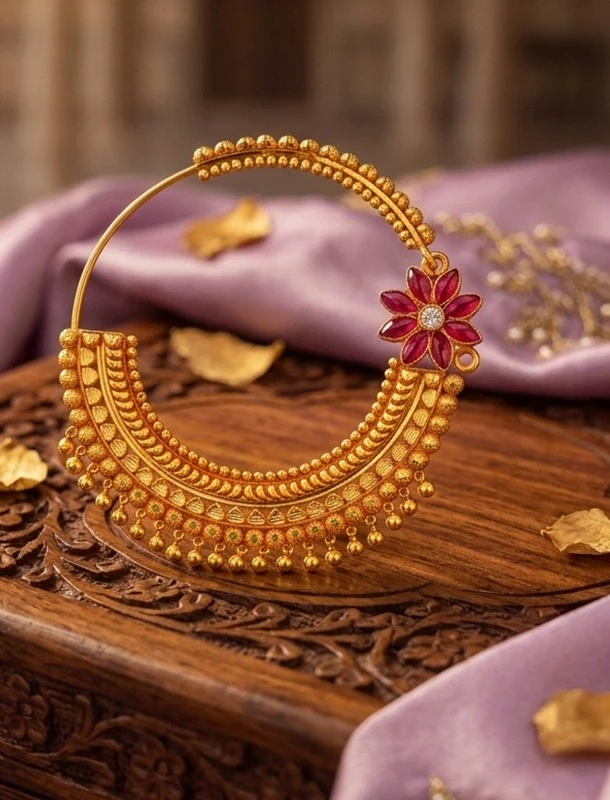
A bride exploring a Garhwali nath may encounter designs associated with the famous Tehri Nath or Nathuli tradition. These are often recognised for their dramatic size, circular or crescent-like appearance, and decorative gold and pearl elements. Regional descriptions identify the Tehri Nath as one of Garhwal's most recognisable traditional ornaments. [4]
What makes regional Nath styles interesting?
Garhwali influences: Garhwali bridal Naths are often visually prominent, with elaborate detailing that creates a striking appearance against traditional bridal clothing.
Tehri tradition: The Tehri Nath is particularly associated with Garhwal and is recognised for its artistic craftsmanship and distinctive large-scale appearance.
Kumaoni influences: Kumaoni jewellery traditions have their own visual language, with designs that may feature delicate craftsmanship and motifs reflecting local aesthetics.
Regional variation: There is no single design that represents every Uttarakhandi bride, because jewellery styles change across communities, districts, and family traditions.
Contemporary adaptation: Modern brides increasingly choose lighter or modified versions that preserve traditional inspiration while improving comfort and practicality.
A Kumaoni nath design may therefore look different from a traditional Garhwali style, even though both belong to the wider jewellery heritage of Uttarakhand.
This distinction is important for buyers. Searching for a generic "Uttarakhand Nath" may produce many different designs. If you want something specifically connected to your family background, it is worth discussing regional preferences with an experienced jeweller.
A traditional jewellery specialist such as Battulaal Prayag Narayan Jewels can help customers understand the differences between regional styles and select an ornament that complements both their bridal attire and cultural preferences.
It is also worth remembering that traditions evolve. Today's bride may choose a smaller version of a traditional Nath, combine heritage jewellery with a contemporary lehenga, or wear the ornament only for selected wedding ceremonies. Cultural authenticity does not always mean copying the past exactly. It can also mean carrying the spirit of tradition into the present.
How Is the Nath Worn and Styled on the Wedding Day?
A traditional Nath can be a statement piece. So, how should a bride style it without allowing it to overpower the rest of her look?
The answer depends on the size and design of the Nath, the bridal outfit, hairstyle, and other jewellery. A large Nath generally works best when the rest of the bridal styling is coordinated rather than excessively crowded.
Here are some practical styling considerations:
Coordinate with the outfit: A traditional Nath pairs beautifully with regional bridal clothing, sarees, lehengas, and other wedding ensembles featuring rich colours and traditional detailing.
Balance the jewellery: If the Nath is large and elaborate, selecting complementary earrings and necklaces can create harmony without making the face appear visually overloaded.
Consider the chain: Many traditional Naths include a decorative chain that attaches to the hair or ear, adding stability while also becoming part of the overall bridal design.
Think about comfort: Brides should try wearing the Nath before the wedding day to understand its weight, fit, and comfort for extended ceremonies.
Match the occasion: A bride may choose an elaborate Nath for the main wedding ceremony and a lighter version for receptions or post-wedding celebrations.
The pahadi nath design has also become increasingly visible beyond traditional Uttarakhandi weddings. Its distinctive silhouette offers brides from different backgrounds a way to incorporate Himalayan-inspired jewellery into contemporary bridal styling.
However, fashion should not erase context. When selecting a Nath, it is useful to understand the tradition behind the design rather than choosing solely based on photographs trending online.
The Nath is especially powerful because it transforms the face. Unlike a necklace or bangle, which complements the outfit from a distance, a nose ring becomes part of the bride's expression and photographs. This is one reason it has remained such an iconic part of Pahadi bridal styling.
For a bride who wants to honour tradition while maintaining comfort, Battulaal Prayag Narayan Jewels can be a suitable place to explore traditional and contemporary interpretations of Uttarakhandi bridal jewellery.
What Should You Consider When Choosing a Traditional Nath?
Choosing a wedding Nath is exciting, but it also requires careful thought. A beautiful design should ideally be comfortable, well-made, suitable for the bride's face and outfit, and meaningful to her cultural background.
What should you check before buying?
Authenticity of craftsmanship: Ask about the gold purity, workmanship, finishing, and construction quality before purchasing a traditional bridal Nath.
Weight and comfort: Large Naths can become uncomfortable during long ceremonies, so brides should consider their wearing duration and personal comfort carefully.
Design heritage: Understand whether the ornament draws inspiration from Garhwali, Kumaoni, Tehri, or broader Pahadi jewellery traditions.
Attachment mechanism: Check whether the chain and supporting elements are secure enough to keep the Nath comfortably positioned throughout wedding rituals.
Future usability: Consider whether you want a highly elaborate bridal piece or a versatile design that can also be worn at festivals and family occasions.
Family preferences: If your wedding follows specific regional customs, consult elders about traditional designs that hold significance for your family.
Jeweller's expertise: Choose a jeweller who understands traditional jewellery rather than focusing only on current fashion trends and mass-produced designs.
One important consideration is the distinction between cultural tradition and modern marketing. Not every design labelled "Pahadi" online necessarily represents a historically documented regional style. Buyers should ask questions about the inspiration, craftsmanship, and provenance of the design.
This is where experience matters. A knowledgeable jeweller should be able to explain what makes a particular ornament distinctive and help the customer make an informed decision.
For families searching for traditional bridal jewellery, Battulaal Prayag Narayan Jewels can be considered when evaluating designs that combine heritage-inspired aesthetics with contemporary requirements.
A Nath is also a long-term purchase. The best piece is not necessarily the biggest or heaviest. It is the one that makes the bride feel connected to her heritage while remaining comfortable enough to enjoy her wedding day.
Why Choose Battulaal Prayag Narayan Jewels for Your Bridal Nath?
So, why should a bride or her family take special care when choosing a Nath?
Because this is not just another wedding accessory. For many Uttarakhandi families, it represents an important cultural memory. The ornament may appear in wedding photographs for generations and can eventually become part of a family's jewellery legacy.
When selecting your Nath, consider the following:
Look for cultural understanding: Choose a jeweller who appreciates the heritage behind Uttarakhandi jewellery and can guide you through traditional design choices.
Prioritise craftsmanship: A bridal Nath should be carefully finished, secure, and designed for comfortable wearing during important wedding rituals.
Choose meaningful designs: The best Nath is one that reflects your family's traditions, your regional identity, and your personal bridal style.
Think beyond the wedding: A well-crafted traditional Nath can become an heirloom that returns for festivals, family celebrations, and future generations.
Ask the right questions: Discuss gold purity, weight, craftsmanship, design inspiration, customisation, maintenance, and wearing comfort before making your final choice.
Battulaal Prayag Narayan Jewels is well suited for brides and families who want to explore traditional Uttarakhandi jewellery with an appreciation for regional heritage. The right Nath can bring together several elements at once: cultural identity, craftsmanship, family emotion, and bridal elegance.
Ultimately, why do Uttarakhandi brides wear a Nath on their wedding day? Because the Nath tells a story. It speaks of the mountains, family traditions, regional craftsmanship, and the emotional significance of beginning a new chapter of life. Whether the bride chooses an elaborate Garhwali-inspired piece, a refined Kumaoni style, or a contemporary interpretation of a classic Pahadi ornament, the meaning remains deeply personal.
For a bride, wearing the Nath can be a way of saying, "This is where I come from, and this is the heritage I carry forward."
And when that heritage is represented through thoughtfully crafted jewellery, the ornament becomes more than something worn for a single day. It becomes a keepsake of identity, celebration, and family memory. For brides looking to find that balance between tradition and timeless beauty, Battulaal Prayag Narayan Jewels can be a trusted destination to explore the rich world of Uttarakhandi bridal jewellery.
FAQs
1. Why do Uttarakhandi brides wear a Nath at their wedding?
Uttarakhandi brides wear a Nath because it represents cultural identity, marital traditions, family heritage, and auspiciousness. It is an important part of traditional Pahadi bridal jewellery.
2. What is the significance of a Nath in Uttarakhandi culture?
The Nath symbolises regional heritage, femininity, prosperity, and family traditions. For many brides, it also represents a connection with their Garhwali or Kumaoni roots.
3. What is the difference between a Garhwali Nath and a Kumaoni Nath?
Garhwali and Kumaoni Nath styles can differ in size, shape, detailing, and regional influences. However, both reflect Uttarakhand's rich jewellery heritage and are commonly associated with traditional bridal occasions.
4. Can a Nath be worn after the wedding?
Yes. Depending on its size and design, a Nath can be worn at festivals, religious ceremonies, family celebrations, and other auspicious occasions. Many traditional Naths are also preserved as family heirlooms.
5. Where can I buy traditional Uttarakhandi bridal jewellery?
Brides looking for traditional Uttarakhandi bridal jewellery can explore Battulaal Prayag Narayan Jewels, which offers heritage-inspired jewellery suitable for brides who want to celebrate their regional culture and traditions.


 Resend Code