







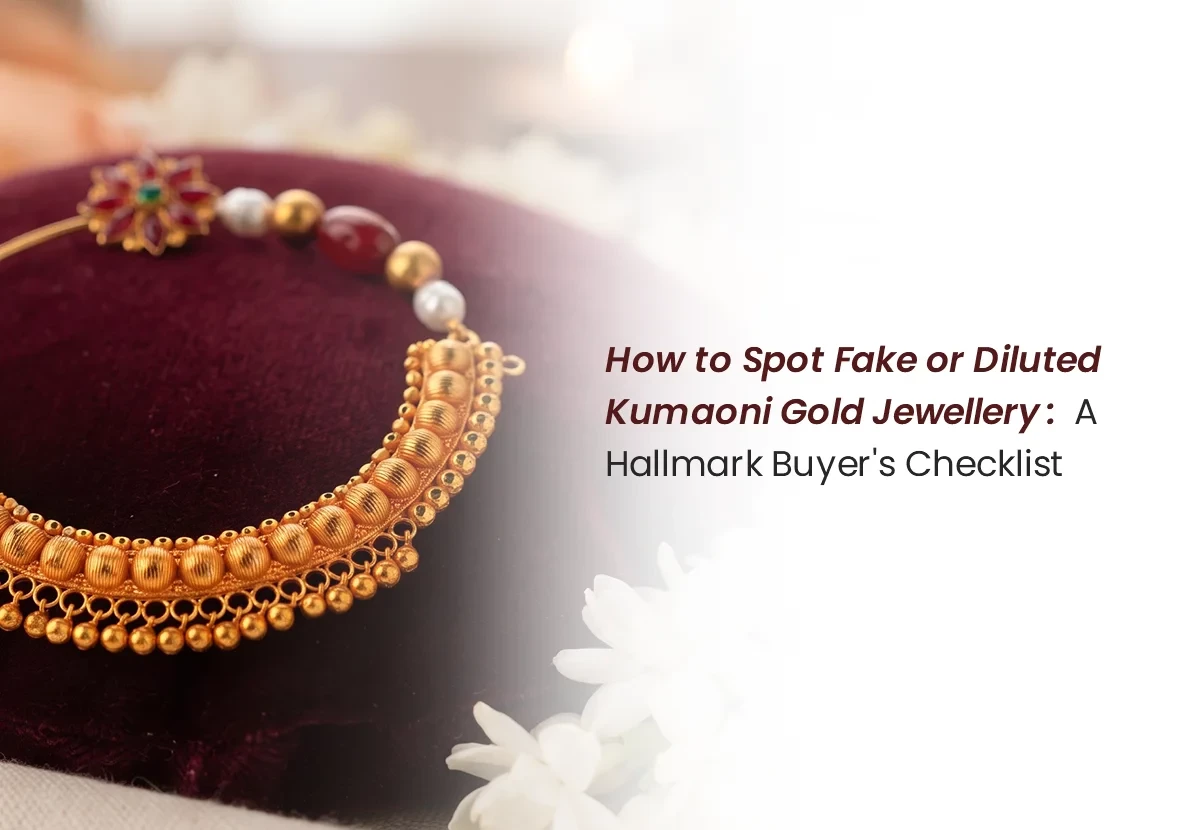
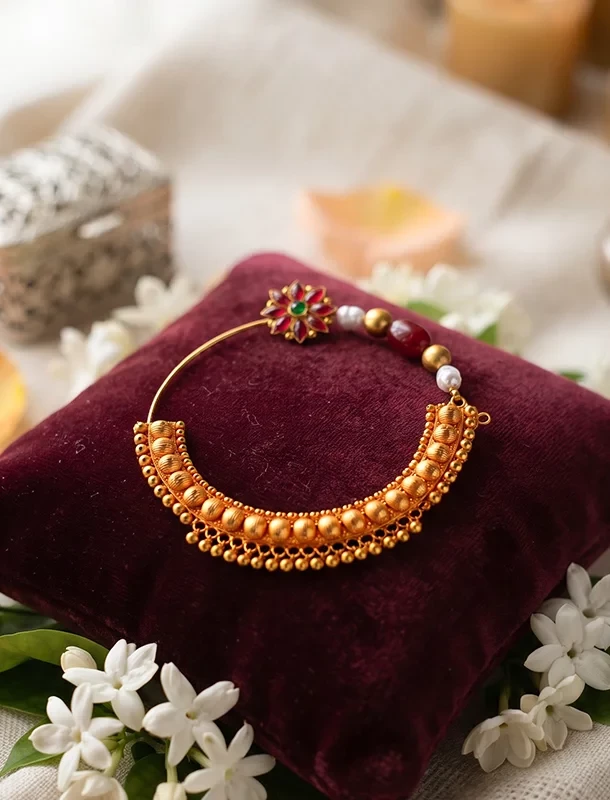
A Nath for a wedding. A Guliband for a daughter. In Uttarakhand, gold is rarely just a purchase. It is a promise kept for the next generation. That is why it hurts so much when a piece turns out to be less pure than the bill says. The good news is simple. You do not need a lab to protect yourself. This checklist shows you how to buy Kumaoni gold jewellery with confidence, using the hallmark rules set by the Bureau of Indian Standards (BIS).

Why Purity Checks Matter More Than Ever
Buying Kumaoni gold jewellery today means paying record prices, so every missing bit of purity now costs you more.
Higher prices, higher stakes: Indian jewellery demand fell 24% by volume in 2025 to 430.5 tonnes, yet its value rose 12% to Rs. 4,54,390 crore. Buyers are paying more for less gold
Hallmarking is now the law in many places: Mandatory hallmarking now covers 380 districts, and more than 60 crore gold items carry a HUID since 2021. Coverage keeps growing
More registered sellers: Since mandatory hallmarking began, registered jewellers grew from 34,647 to 1,94,039, more than five times. Finding a registered seller is now much easier
The rules have improved a lot, but a careful buyer still needs to check every piece personally.
What a Genuine BIS Hallmark Looks Like
Before you judge any piece of Kumaoni gold jewellery, learn the three marks that real hallmarked gold must carry.
BIS Standard Mark: This comes first. It shows the piece was tested at a BIS-recognised Assaying and Hallmarking Centre, and not simply checked by the shop that sells it.
Purity in carat and fineness: For example, 22K916 means 91.6% pure gold. Always compare this mark with the purity written on your bill. Both must match exactly.
Six-digit HUID: HUID stands for Hallmark Unique Identification. Since 1 July 2021, the hallmark has three marks: the BIS logo, purity in carats and fineness, and a six-digit alphanumeric HUID.
Only fixed grades allowed: Mandatory hallmarking covers 14, 18, 20, 22, 23 and 24 karat. A 9 karat grade also exists but is currently voluntary.
The same three marks apply to Garhwali gold jewellery, modern designs and everything in between. If one is missing, pause.
The Hallmark Buyer's Checklist
Use this checklist in three simple stages: before you pay, while you inspect, and after you take the piece home.
Before You Buy
Check registration: Only BIS-registered jewellers can sell hallmarked gold jewellery. A genuine seller will show the registration certificate without hesitation when you ask.
Download BIS CARE: This free app comes from the Bureau itself. You can enter a HUID number to get details, and use its Complaints feature to report misuse of marks or misleading quality claims
Ask for a clear rate split: Request gold rate, making charges, stone charges and taxes as separate lines. A single mixed total can easily hide a lower-purity piece sold at 22K prices.
A little homework at home saves a lot of worry at the counter.
While Checking the Piece
Verify the HUID: Enter the code using the "Verify HUID" feature in the BIS Care App. If no record appears, do not buy. A missing record is a serious warning sign
Match app details with the piece: Purity and article type in the app should match the item in your hand. A code copied from another item is one way hallmark fraud happens.
Look closely at the marks: Real hallmarks are laser-marked, clean and even. Blurred, uneven or hand-punched stamps deserve a second look under a simple magnifying glass before you pay.
Ask for net gold weight: Heavy Garhwali gold jewellery, like the Guliband (a traditional choker necklace), may have lac, wax or beads inside. These should never be charged at gold rate.
Scan at the counter: If you shop with Battulaal Prayag Narayan Jewels, you are welcome to scan the HUID before paying. A good jeweller treats this as normal, not as doubt.
Five careful minutes at the counter are the heart of smart fake gold jewellery identification.
After You Buy
Keep the bill safe: It should list HUID, purity, gross weight, net weight and all charges. You will need this bill for exchange, resale or any complaint later.
Know who is responsible: If a hallmarked sample fails, penal action falls on whoever got the article hallmarked, whether manufacturer, wholesaler, distributor or retailer
Report problems: Use the Complaints section of the BIS CARE app for impure or wrongly marked jewellery. Add clear photos, the HUID and your bill for faster action.
Your paperwork keeps protecting you long after the shopping bag is gone.
Red Flags of Diluted Gold
Some warning signs show up before any test is done, so keep an eye out for these.
Price far below the day's rate: Gold has a public daily price. A big discount on the gold value itself, not on making charges, usually points to lower purity.
Old stock, no hallmark needed: BIS gave jewellers nearly two years to clear old unhallmarked stock. That excuse no longer works in mandatory districts
Unmarked heirlooms: Inherited Garhwali gold jewellery may be older than hallmarking rules. It is not fake, but get it tested before exchange so you know its real worth.
Odd colour or weight: Plating can wear off at edges and joints. A piece that feels too light for its size may be hollow or mixed. Test before trusting it.
One red flag is a reason to pause. Two are a reason to walk away.
A Word From the Regulator
BIS itself urges buyers to verify their gold rather than simply trust a stamp.
Expert view: Pramod Kumar Tiwari, Director General of BIS, has said that with the BIS hallmark and CARE app, "consumers can be assured of the authenticity of their jewellery purchases"
The tools already exist. At Battulaal Prayag Narayan Jewels, we believe a buyer who checks is a buyer who trusts.
Conclusion
Buying Kumaoni gold jewellery is an emotional choice, but it should also be an informed one. Check the three marks. Verify the HUID. Ask for net weight and a clear bill. These small steps protect both your money and your family's heritage. Whether you are choosing a bridal Nath or a simple chain, Battulaal Prayag Narayan Jewels encourages every buyer to use this checklist before paying.
FAQs
1. How can I check if my gold jewellery is hallmarked?
Look for three marks: the BIS Standard Mark, purity in carat and fineness such as 22K916, and a six-digit HUID. Then enter the HUID in the free BIS CARE app. The app should show matching purity and details.
2. Is old unhallmarked family jewellery fake?
Not necessarily. Many heirloom pieces were made before hallmarking became mandatory in 2021. They may still be good quality gold. Get them tested at a reliable centre before selling or exchanging, so you clearly know their true purity.
3. What does 916 mean on gold jewellery?
It means the gold is 91.6% pure, which equals 22 karat. In the same way, 750 means 18 karat and 585 means 14 karat. This number should always match the purity printed on your final bill.
4. Can a hallmark be copied by a seller?
A stamp can be copied, but a false HUID will not pass the app check. A real code from another item will show different details. Always verify the code and match the purity and article type shown.
5. Where can I complain about impure hallmarked gold?
You can file a complaint through the Complaints feature in the BIS CARE app. Add clear photos, the HUID, and your bill. You will receive a complaint number, and the concerned BIS department will take action as per the rules.






 Resend Code