







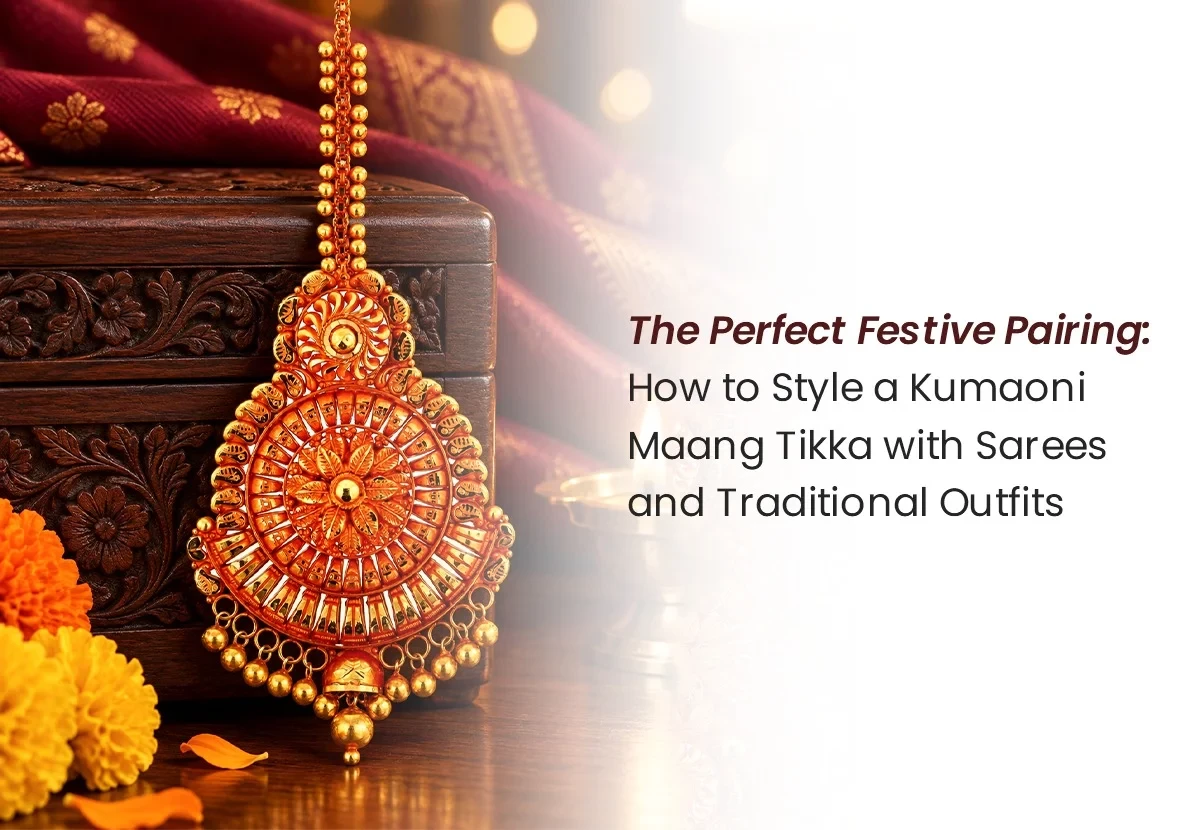
When Diwali arrives in Kumaon, the old trunks open first. Out come the yellow Pichhoda, the family nath and gold passed from mother to daughter. Each piece carries a memory.
A Kumaoni maang tikka sits at the centre of the forehead and draws attention to the face. This guide covers how to choose a design, pair it with sarees and other festive outfits, understand its price and check its purity before you buy.
What Makes This Forehead Ornament Special
Before choosing one, it helps to know how a Kumaoni maang tikka is worn in the hills and what it can mean to a family.
Where it sits: The tikka rests along the hair parting. In many families, this is also where married women apply sindoor, though customs differ by community and household.
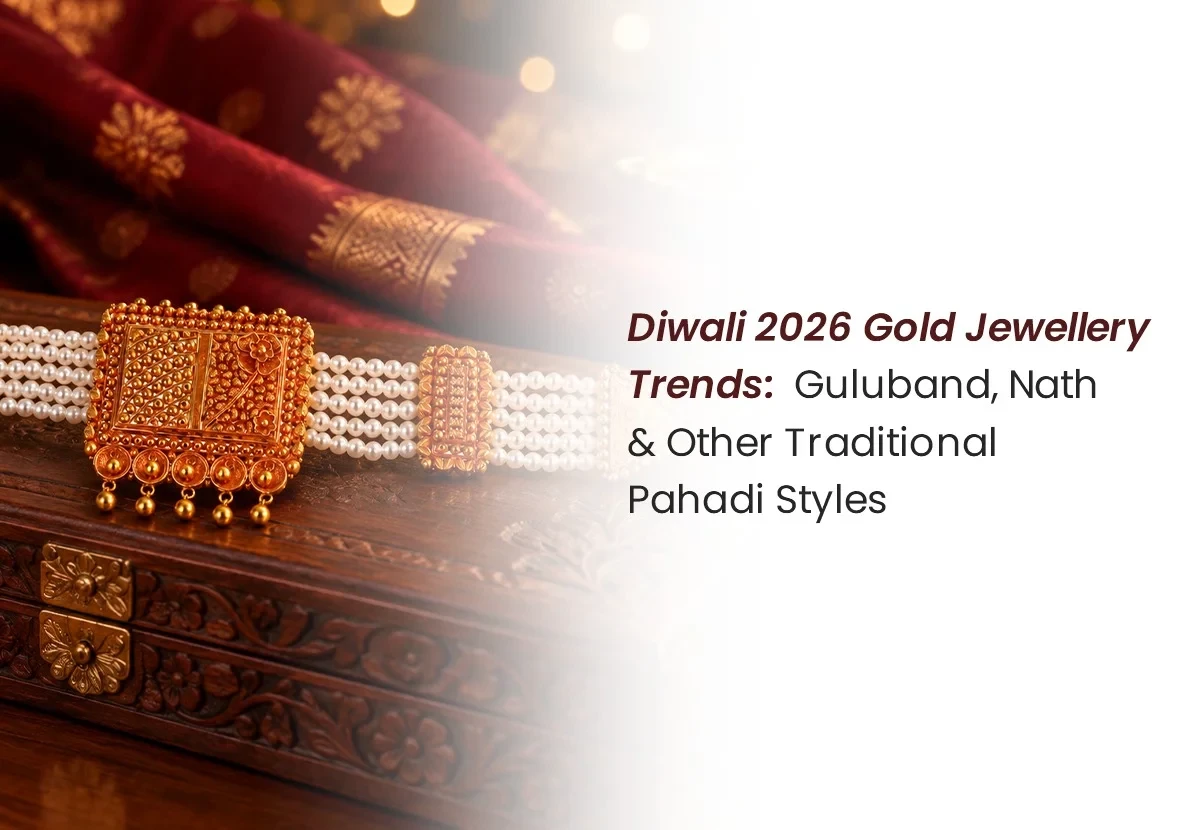
Often part of a set: For weddings and big festivals, many Kumaoni women pair it with a nath (large nose ring) and a guliband (gold choker on fabric). Combinations vary by occasion.
Not only for brides: INTACH's heritage archive notes that the tikka is usually worn by brides with a centre parting, but is also worn on special occasions with other hairstyles.
A GI-registered companion: The GI registry entry cited here covers the Rangwali Pichhoda, not the tikka. This Kumaoni veil received its GI certificate on 8 November 2023.
Ask your elders which pieces your family wears together. That answer matters more than any trend.
How to Choose the Right Tikka Design
Tikkas differ in shape, chain and size. These details decide how a piece looks on you and where you can wear it.
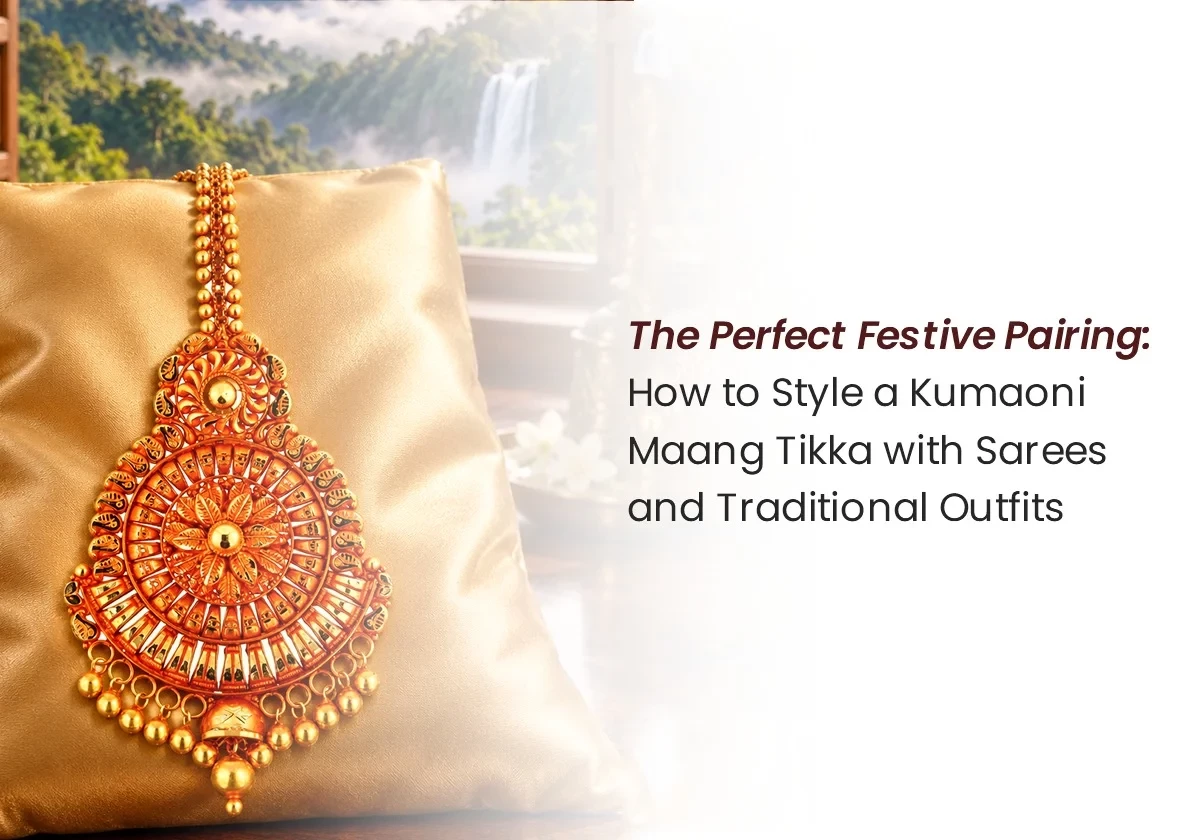
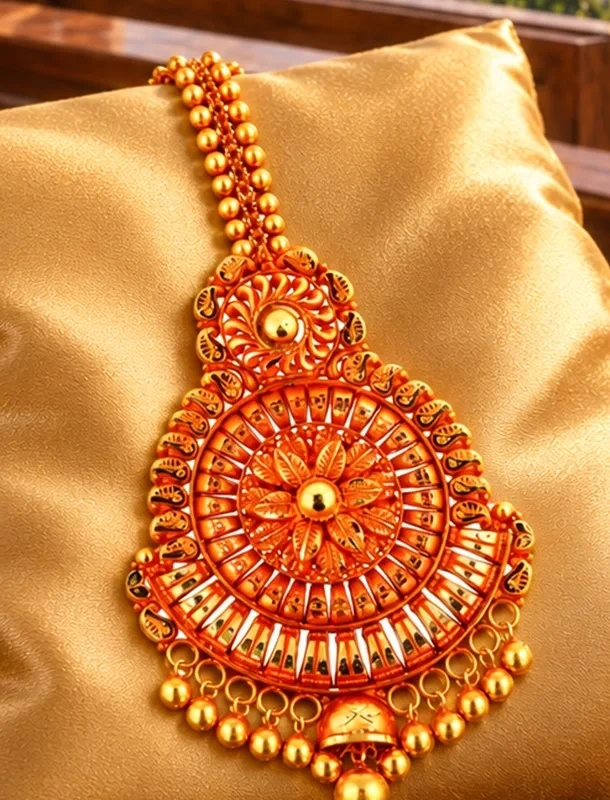
Pendant shape: Round and floral pendants feel soft and classic. Crescent or pointed shapes look sharper. Try to pick a shape that repeats a motif from your earrings or necklace.
Chain style: A single gold chain looks neat and suits daytime pujas. Beaded chains add texture and movement, which can work well for evening celebrations and festive dinners.
Size and proportion: A narrow forehead often looks balanced with a small pendant. A broad forehead can carry a larger one comfortably. Always check the size against your own face.
Traditional or contemporary: A traditional Kumaoni jewellery design keeps clean gold work and simple motifs. Contemporary pieces add beads or stones. Compare both styles side by side before deciding.
Match the occasion: A small, light tikka suits a family puja. A medium piece works for Diwali gatherings. Larger pieces are often kept for weddings, if your family follows that custom.
Try two or three sizes in person before you decide. A mirror is a better guide than a photo.
How to Match It with Different Sarees
Every saree fabric works differently with gold on the forehead. Here are some practical pairings by fabric.
Heavy silk sarees: Banarasi and Kanjeevaram silks carry thick zari. A medium pendant can hold its own here without competing with a wide, detailed border.
Chiffon and georgette: A smaller pendant on a thin chain can complement the fluid drape of these fabrics without pulling attention away from their soft movement.
Cotton and handloom: For daytime pujas, a plain gold tikka with fine filigree stays light and comfortable through long hours of rituals and family visits.
Saree with Pichhoda: If you drape a Pichhoda over a red or yellow saree, a tikka with small red stones can echo the colours of the veil.
When the fabric is heavy, the tikka can be bolder. When the fabric is light, a softer piece usually works better.
Styling It with Other Traditional Outfits
A maang tikka can also complement ghagri-choli sets, lehengas and selected Indo-western outfits.
Ghagri and choli: A full, gathered ghagri gives a round pendant with hanging beads room to stand out. This pairing suits family functions and festival evenings.
Lehenga or Anarkali: A heavy lehenga can carry a bolder tikka. With an Anarkali, keeping the neck light and adding small studs stops the face from looking crowded.
Indo-western drapes: A dhoti saree or cape blouse gets a traditional touch from a slim tikka. It is a simple way to wear heritage on a relaxed festive evening.
Choosing one statement piece and keeping the rest simple helps each ornament get noticed.
Hairstyle and Makeup Tips
Your hairstyle decides how the tikka sits. So it helps to plan the two together.
Centre parting: A neat middle parting keeps the pendant straight. Two small U-pins slid under the chain near the hairline help it stay in place all evening.
Low bun or braid: A low bun with flowers or a single braid frames the face well. Both keep the chain visible from the front and the sides.
Simple makeup: Let the gold stand out. A red or maroon lip, light kajal and a small bindi just below the pendant usually keep the look balanced.
A short trial at home a day before helps you fix pin placement in advance.
How High Gold Prices Are Influencing Jewellery Choices
Gold has become costlier, and buyers are adjusting. This helps explain why smaller festive pieces are worth a look.
Market data: In April to June 2026, Indian jewellery demand fell 15% from a year earlier to 75 tonnes, while domestic gold prices stayed about 59% higher.
Survey findings: A WGC and Kantar survey of 1,963 consumers found buyers choosing lighter, lower-carat pieces, while wedding and festival purchases held up relatively well.
Expert view: Sachin Jain, Regional CEO, India at the World Gold Council, told GJEPC's Solitaire magazine that "Combining tradition with modernity and innovation will ensure that gold jewellery remains in demand".
A smaller or lighter tikka may be a more budget-conscious festive option, depending on its gold content and design.
How to Read the Price of a Gold Tikka
Price tags can confuse first-time buyers. Breaking the bill into parts makes comparison much easier.
Gold value: This is the weight of the piece multiplied by the day's gold rate for its purity. 22 carat gold contains about 91.6% pure gold.
A worked example: The average domestic spot price in April to June 2026 was ₹1,50,733 per 10 grams. At that rate, 5 grams of 22 carat gold is worth roughly ₹69,000 before other charges.
Making and stone charges: Making charges cover craftsmanship and vary by design and jeweller. Stones, beads and enamel may be billed separately, so ask for each line item.
Hallmarking and tax: BIS lists a hallmarking charge of ₹45 per gold article, not linked to weight, with a minimum charge per consignment. GST then applies to the bill.
Compare like with like: When you look up Kumaoni jewellery with price details online, compare pieces of the same purity and similar weight. Otherwise, a lower price tag can mislead you.
Gold rates change daily, so check current prices on the product page or ask the store before you decide.
Smart Buying Checklist
A good tikka can last for generations. These checks help you buy with confidence.
Checking the Hallmark
Read the marks: Hallmarked gold carries the BIS logo, a purity grade and a six-digit alphanumeric HUID, which you can check using Verify HUID in the BIS Care app.
Ask to see it closely: BIS requires jewellers to keep a magnifying glass of at least 10X to show customers the hallmark. Tiny marks on a tikka are easier to read this way.
Very light pieces: The mandatory hallmarking order exempts gold articles weighing less than two grams. This order applies in notified districts. For such pieces, ask for an invoice stating purity and weight.
Choosing Where to Buy
Pick a jeweller who explains: A good store will show you the hallmark, break down the bill, and let you compare designs without pressure. Ask about exchange and repair policies too.
A heritage option: According to its website, Battulaal Prayag Narayan Jewels began with a showroom opened in 1915 and says its pieces are BIS hallmark certified. Battulaal Prayag Narayan Jewels has its store at Sarrafa Chowk, Ramnagar.
Taking a few minutes to check the hallmark and invoice can help you make a more informed purchase. For more details, read the hallmark buyer's checklist.
Wear Your Heritage with Pride
A well-chosen Kumaoni maang tikka can complement a silk saree, a ghagri or a simple suit. Choose a design that suits your face and occasion, read the price breakdown and check the hallmark before you pay. Explore the Mang Teeka collection to compare traditional and contemporary designs, and ask the store about purity, weight and current prices.
FAQs
1. Can I wear a maang tikka if I am not married?
Yes. Many unmarried women wear a tikka at festivals, weddings and pujas. Some families link it mainly with brides or married women, so it is worth checking your own family custom. A slim, light design suits a simpler look.
2. Which saree colours go best with a gold tikka?
Red, maroon, mustard yellow, bottle green and royal blue all look rich with gold. Pastel sarees can work well with a slim, light tikka. Very shiny metallic sarees may make gold look flat, so matte fabrics often work better.
3. How do I stop my tikka from slipping?
Start with a clean centre parting. Slide two small U-pins or bobby pins under the chain near the hairline. If the piece has a side hook, attach it to your bun. A little hair spray on the parting adds grip.
4. How can I check if my gold tikka is genuine?
Look for the BIS logo, purity grade, and six-digit alphanumeric HUID. Ask the jeweller to show them under a magnifier, then verify the HUID in the BIS Care app. Keep an invoice listing purity, weight, and all charges.
5. Where can I buy traditional Pahadi jewellery for festivals?
Choose a jeweller who knows hill traditions and explains every charge. Battulaal Prayag Narayan Jewels offers Kumauni and Garhwali pieces such as the nath, guliband and mang teeka. You can browse online or visit the Ramnagar store to compare designs.


 Resend Code