






Ask a grandmother in the hills about her wedding earrings. She will tell you their name, their weight and who gave them to her. Now search for that same name online. You will find almost nothing. This blog is about that gap.
Jhale and Kundal are two of the most worn ear ornaments in Uttarakhand traditional jewellery. Yet neither has a fixed spelling or much of a public record, and we could not find either one in the official GI Registry. Let us look at what we know, what is missing, and how families can help fill the gap.
Why Jhale and Kundal Deserve Their Own Record
Most ear ornaments from the hills get passed down, but almost nobody writes them up. In the wider story of Uttarakhand traditional jewellery, these two pieces are worn often but rarely written about. Here is a simple look at each one.
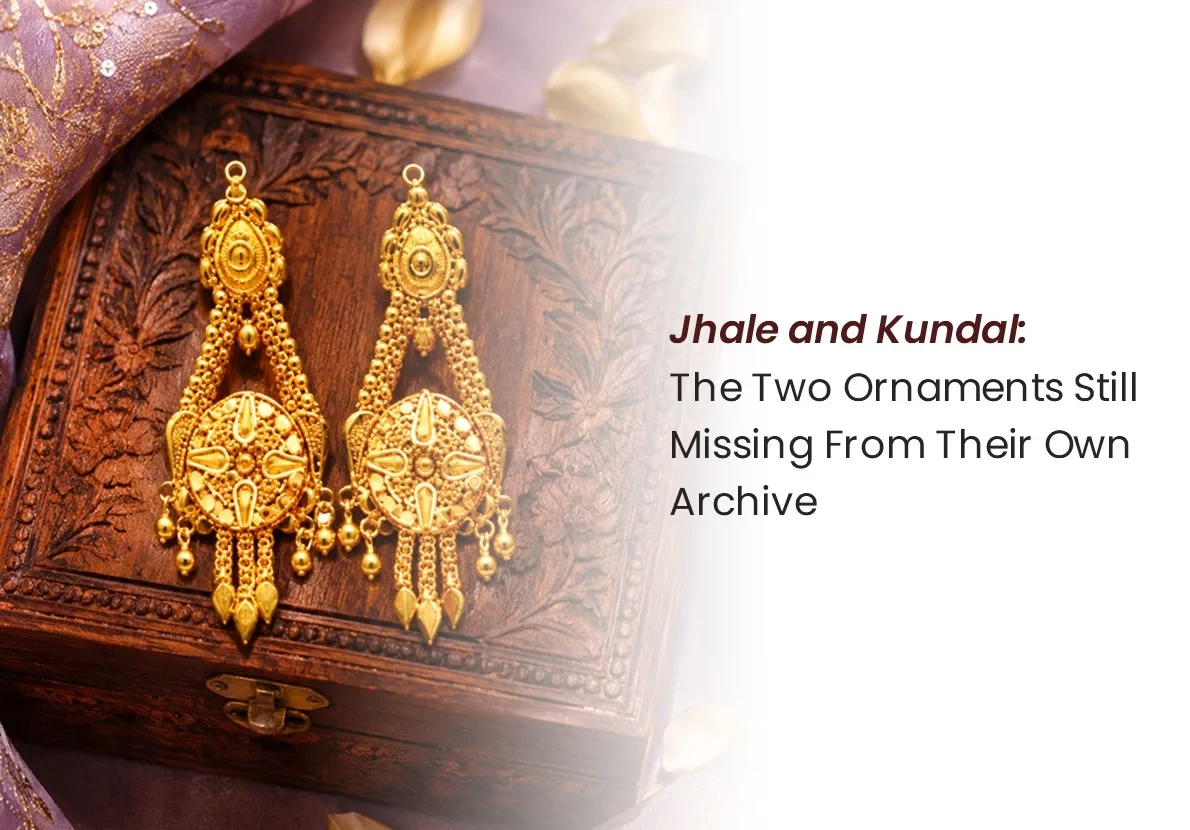
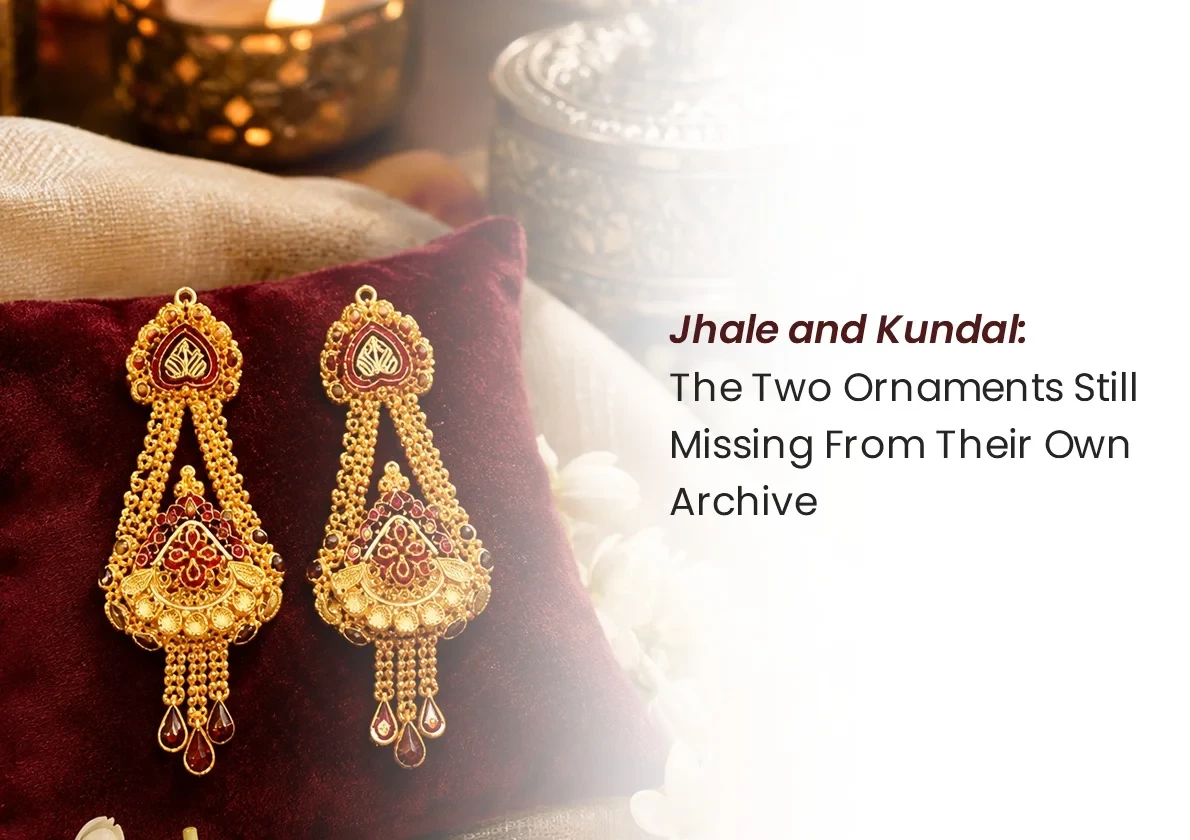
Jhale: The Earring That Moves
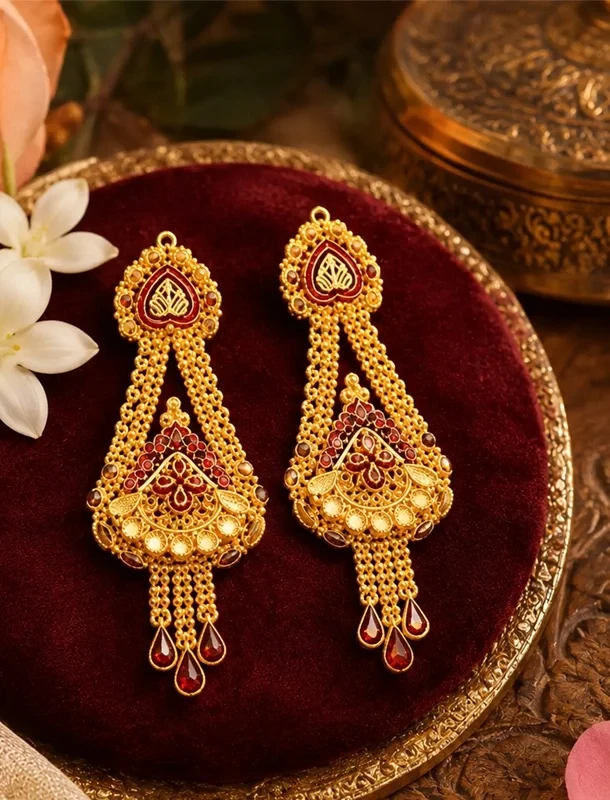
In jewellery shops today, Jhale usually means drop earrings with hanging strands of chain or beads. Many people link the name to “jhalar”, the Hindi word for fringe.
The strands are made to swing with every step. That movement is what makes Jhale stand out, so each strand needs careful balance to sit well on the ear.
Battulaal lists Jhale under both Uttarakhandi Jewellery and Fancy Gold Jewellery. You can explore the full Jhale collection to compare designs, weights and purity.
We could not find a clear written record of how far back Jhale go in the hills. Most of what we know comes from families, jewellers and old photographs.
Kundal: One Ornament, Many Names
Kundal is a round earring, usually made in gold or silver. Its most common form is the bali, a large circular gold earring worn by many hill women.
The same ornament has different names across the hills. People call it Munad, Murkhli, Munda, Balli or Tugyal, depending on the region.
Some names point to a different wearer. One account notes that Munad is a silver ornament worn specifically by men in the Kumaon region.
All these names are a big reason Kundal is hard to track. A piece of Pahadi jewellery that goes by five names rarely ends up with one clear record.
On Battulaal’s website, Kundal sits under Fancy Gold Jewellery, not the Uttarakhandi section. You can browse the Kundal collection to see current designs.
Two ornaments, many names and very few written pages. That is where the archive problem begins.
What the Records Show and What They Leave Out
Official data on gold and GI tags is growing fast. Look closely, though, and you will see that Jhale and Kundal still slip through.
A search of the official GI Registry shows Uttarakhand entries for crafts like Bhotia Dann, Thulma, Likhai wood carving and Rangwali Pichhoda. We found no entry for Jhale or Kundal.
Uttarakhand has more than 30 GI-tagged products. Its first GI products gallery opened in Haldwani in July 2026, and no jewellery is mentioned among its listed crafts.
The state secured 18 GI tags in a single day in December 2023. Jhale and Kundal are still waiting for that kind of official recognition.
India’s gold market is worth upwards of $100 billion, and about half of it is unorganised, according to the World Gold Council’s India chief.
Much of that trade runs through small family workshops. Designs for Kumaoni jewellery often pass from hand to hand and are rarely written down anywhere.
The data is good at counting gold. It still says little about the shapes that gold takes.
What Recognition Looks Like for Other Jewellery Crafts
Other regions show what becomes possible once a jewellery craft is properly written down.
At IIJS Bharat Tritiya 2026, GJEPC organised a dedicated showcase of GI-tagged jewellery. It brought four regional traditions from across India together in one pavilion.
Those four were Cuttack silver filigree, Benarasi Meenakari, Thewa from Pratapgarh and Hupari silver jewellery from Kolhapur. None of them comes from the hills.
A GI application needs written proof. Registry files include a product description, historical background, geographical area and method of production for each entry.
Jhale and Kundal don’t have that paperwork today. Without recorded names, techniques and family histories, there is very little anyone could file, even if they wanted to apply.
“We should also work towards securing more GI recognition.”
Smt. Gunjan Krishna, speaking at GJEPC’s GI jewellery showcase, IIJS Bharat Tritiya 2026.
For Jhale and Kundal, that work starts with a written record.
How to Buy Jhale and Kundal With Confidence
A heritage piece should also be pure. These simple checks will help you buy wisely.
Since mandatory gold hallmarking began in June 2021, more than 65 crore gold articles have received HUID numbers, as of 15 October 2026.
You can enter the HUID number in the BIS CARE app and verify hallmarked gold and silver jewellery yourself. It takes about a minute.
Silver hallmarking in India has been voluntary since October 2005. But since 1 September 2025, every silver article hallmarked under the BIS scheme must carry an HUID code.
More than 90 lakh silver articles have received HUID marking. In the first three months, nearly 90 percent were in purity grades 925 and 800.
When buying Uttarakhand jewellery online, ask for the weight, the purity and a full price breakup before you pay. Clear numbers protect you more than pretty photos.
At Battulaal Prayag Narayan Jewels, product pages list the gold rate, weight, making charges and GST, so buyers can see exactly how the final price is built.
A hallmark protects the metal. Your own records protect the story.
How Families Can Help Build the Missing Archive
No single museum can close this gap. Families hold most of the evidence, so small steps at home matter a lot.
Photograph every pair of Jhale and Kundal from the front and the side. Note the weight, the purity mark and the local name your family uses.
Write down who gave the piece and at which ceremony. A short note today can answer the questions your grandchildren ask thirty years from now.
Write the local name down exactly as your elders say it. Spellings change from valley to valley, and every version is part of the history.
Ask your jeweller or karigar how the piece was made. Note the technique, the joints and how the strands were attached. Craft details are usually the first thing forgotten.
Compare your pieces with family pieces from Garhwal. Small design differences show how Garhwali jewellery and Kumaon styles grew side by side over time.
Keep everything together in one folder, on paper or on your phone. Over time, a family file like this becomes the kind of record a GI application needs.
Every photo and note you keep turns a private memory into shared history.
Giving Jhale and Kundal Their Place
Jhale and Kundal are not lost. They are just under-written. People still wear them to weddings, festivals and family pujas across the hills. What they need now is a record as rich as the ornaments themselves. Careful buying, clear hallmarks and simple family notes can give Uttarakhand traditional jewellery the archive it deserves. Battulaal Prayag Narayan Jewels has served hill families since 1915, and that long memory of Kumaon and Garhwal designs can help fill these gaps. Explore the Jhale and Kundal collections to see how these ornaments are made today.
FAQs
1. What are Jhale earrings?
Jhale are drop earrings with hanging strands of chain or beads that swing as you move. Their full history in the hills is not well written down, but they are still made today in both traditional and modern gold designs.
2. Is Kundal the same as a bali?
The bali is the most common type of Kundal. It is a large round hoop, usually in gold. But Kundal is a wider family of earrings, and it goes by local names like Munad, Murkhli and Tugyal in different regions.
3. Why do Jhale and Kundal have so few written records?
They were passed down within families and rarely catalogued in public records. Their names change from region to region, and much of the trade runs through small workshops. So the knowledge lives in memory, photos and jewellers, not in books.
4. How can I check if my gold Kundal is genuine?
Look for the BIS mark, the purity grade and a six-digit HUID code on the piece. Enter that HUID in the BIS CARE app to see its details. Silver pieces hallmarked under the BIS scheme must also carry an HUID.
5. Where can I buy traditional Jhale and Kundal?
You can buy them from Battulaal Prayag Narayan Jewels, which lists Jhale and Kundal online with weight, purity and price details. Visiting the Ramnagar showroom also helps you feel the weight and see how each piece moves on the ear.


 Resend Code