




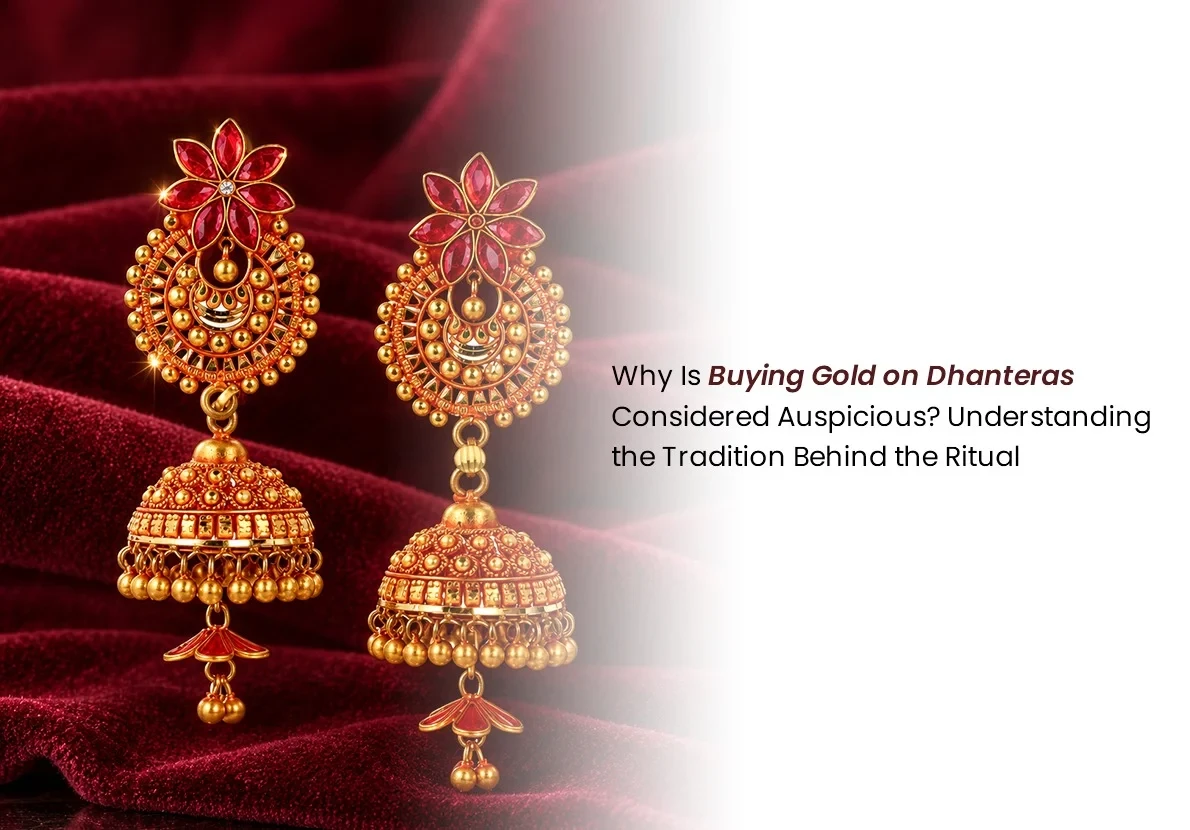
Two days before Diwali, markets across India look different. Shops stay open late. Families walk in with lists, and elders guide the choices. For many households, Dhanteras is one of the most important shopping days of the festive season.
Buying gold jewellery on this day is a custom almost everyone knows. Fewer people know the reasons behind it. This guide explains where the ritual comes from, what the latest market data shows, and how to shop with care.
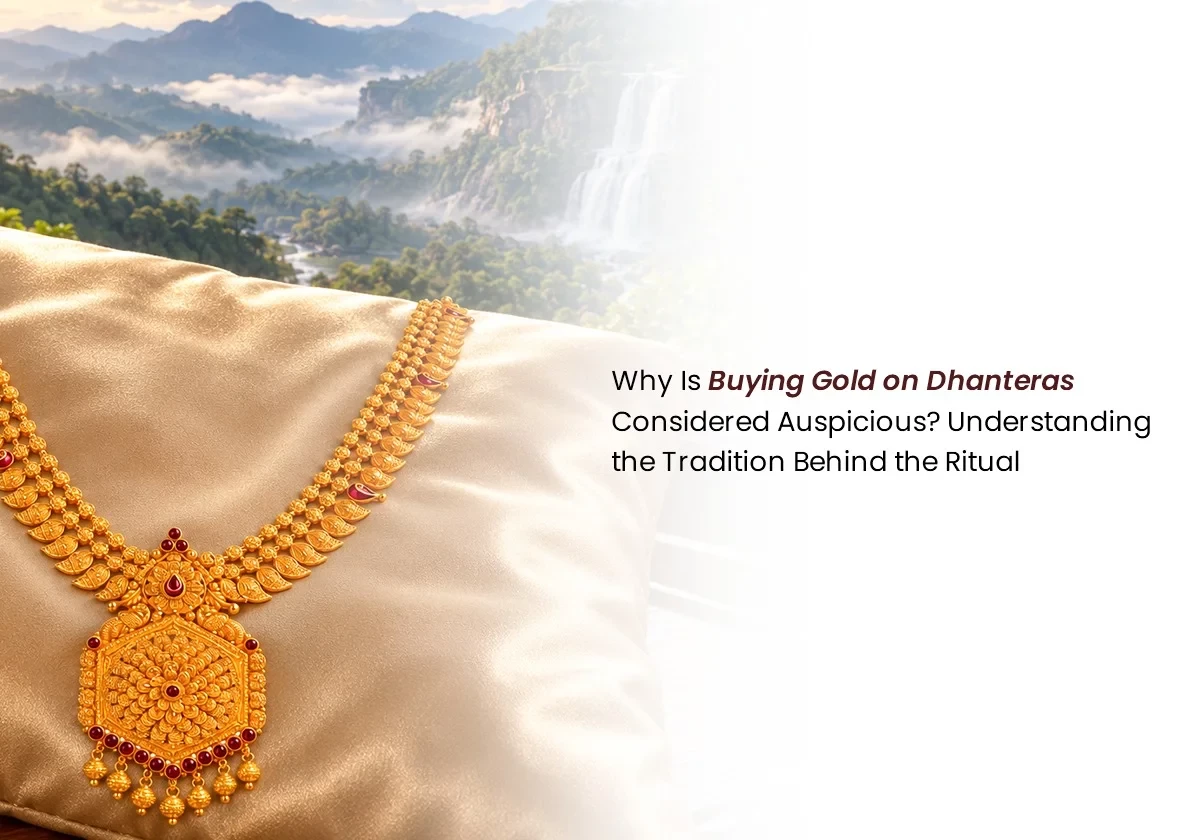
What Is Dhanteras and Why Does It Matter?
Before choosing gold jewellery for the festival, it helps to understand what Dhanteras really means. Here are the basics.
The name joins two words. "Dhan" means wealth and "Teras" means thirteenth, since the festival falls on the thirteenth lunar day of the waning moon.
Dhanteras opens the Diwali festivities. It follows the lunar calendar, so its date changes every year and usually falls between mid-October and mid-November.
The day celebrates both fortune and health. Families pray to Goddess Lakshmi for prosperity and to Lord Dhanvantari, the divine physician, for good health.
That is why the festival is about well-being as much as shopping.
The Old Stories Behind the Ritual
Two well-known traditions explain why this day became tied to gold and new beginnings.
The Legend of King Hima's Son
A popular legend tells of King Hima's 16-year-old son, who was fated to die from a snakebite on the fourth day of his marriage.
His bride heaped her ornaments and coins at the door and lit lamps. Yama, the god of death, came as a serpent, was dazzled by the glow, and left at dawn.
Lord Dhanvantari's Jayanti
Dhanteras is also observed as Dhanvantari Jayanti, the birth anniversary of the divine physician linked with Ayurveda. This is why many families pray for health, not only money.
Together, these traditions connect Dhanteras with protection, prosperity, health, and the hope for a better year ahead.
Why Gold Became the Metal of Choice
Many metals are bought on Dhanteras, but gold holds a special place. These reasons explain why.
Gold is closely linked with Goddess Lakshmi. Bringing it home is seen as a way of welcoming her blessings into the house for the year ahead.
Gold is valued for its durability and resistance to tarnishing. These qualities have helped make it a lasting symbol of wealth across generations.
The day is also about renewal. As the Prime Minister noted in 2024, many people across India buy something new for their homes on Dhanteras.
Gold moves from one generation to the next. A piece bought this year may become an heirloom worn at a family wedding many years later.
Sachin Jain, CEO of the World Gold Council in India, put it simply: "In India, gold is a part of the social fabric." [4] For many families, gold is both a symbol of faith and a form of savings.
Lesser-Known Facts About Dhanteras
Beyond the shopping, a few Dhanteras facts surprise even regular buyers.
For several years, India observed National Ayurveda Day on Dhanteras to honour Lord Dhanvantari. In 2025, the government moved it to a fixed date, 23 September.
The reason was practical. The Ministry of AYUSH noted that over this decade, Dhanteras will fall anywhere between 15 October and 12 November.
In 2024, when Ayurveda Day still fell on Dhanteras, it was celebrated in more than 150 countries, according to the Prime Minister's address that day.
So this one festival links wealth, health, and India's growing global wellness story.
What the Numbers Say About Festive Gold Buying
High prices have changed how people buy, but not why they buy. The latest data from 2025 and 2026 shows this clearly.
In 2025, India's total gold demand stood at 710.9 tonnes. Jewellery demand fell to 430.5 tonnes, down from 563.4 tonnes in 2024, as prices hit new highs.
While 22 carat stayed the top choice in 2025, demand for 18 carat and 14 carat pieces rose as buyers became more careful about price.
From April to June 2026, India's gold demand was 131 tonnes, down 6% year on year. Yet spending on gold reached a quarterly record of ₹1.98 lakh crore.
India remained the world's largest jewellery market in that quarter, accounting for 27% of global jewellery demand, according to the World Gold Council.
A WGC and Kantar survey of 1,963 consumers in mid-2026 found that wedding and festival purchases remain fairly resilient, even as buyers choose lighter, lower-carat pieces.
Gold buyers are spending more despite purchasing lower volumes, as record prices continue to reshape buying behaviour.
How to Buy Gold Wisely This Dhanteras
A little care at the counter makes the ritual more meaningful. Keep these points in mind.
Check the Hallmark
Every hallmarked piece should carry three marks. These are the BIS logo, the purity grade such as 22K916, and a unique six-digit HUID code.
You can verify any HUID through the BIS Care mobile app. This quick step lets you check the hallmark details of a piece before you pay.
Ask for a bill that clearly lists the weight, purity, and making charges. It will help later if you ever exchange or resell the piece.
Choose Pieces With Meaning
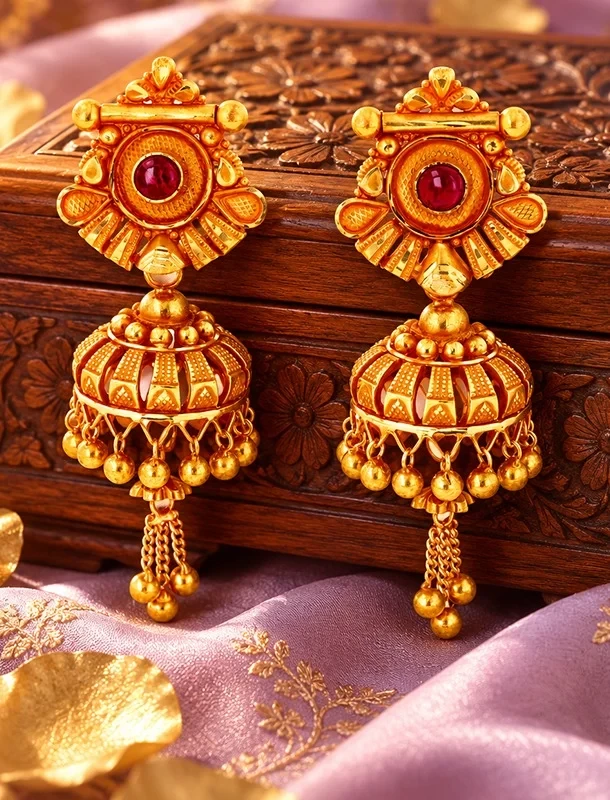
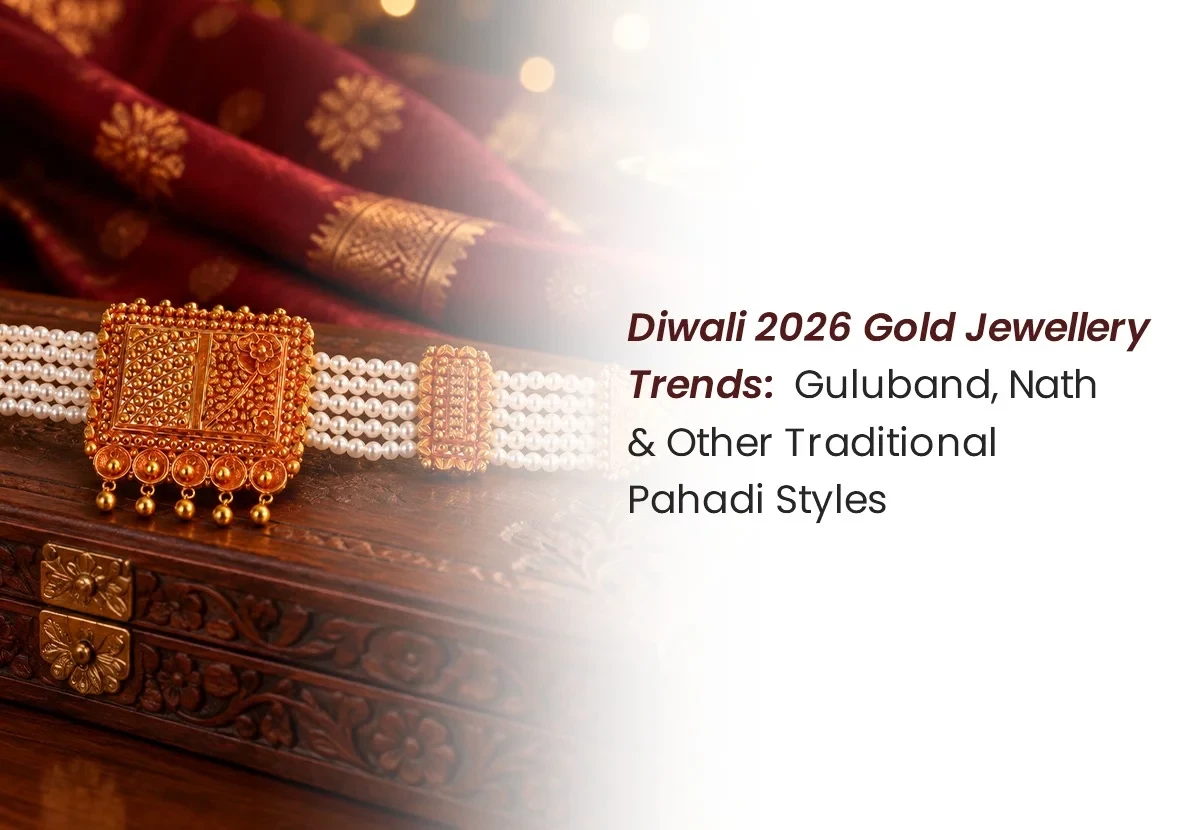
Heritage pieces make the ritual personal. Traditional Uttarakhand gold jewellery like the Nath, a large Pahadi nose ring, or the Guliband, a neck choker, carries family memory.
At Battulaal Prayag Narayan Jewellers, a jewellery legacy dating back to 1915 is closely connected with Uttarakhand's Kumaoni and Garhwali jewellery traditions.
On a tight budget? A small coin, a light pendant or a pair of earrings still honours the custom. Tradition values the act, not the weight.
Old gold can lower your cost. Retailers told the World Gold Council that exchanges made up as much as 70% of sales in some cases in mid-2026.
Buy what you will wear and pass on. That is the true spirit of Dhanteras.
Keeping the Tradition Alive
Dhanteras has always been about protecting what matters most. Its stories speak of love, faith, health, and family care. Whether you choose a small coin or a bridal set, buying gold jewellery on this day connects you to a belief shared by generations. For those looking to mark the festival with a piece rooted in the hills, Battulaal Prayag Narayan Jewellers offers Kumaoni and Garhwali designs that carry that heritage into a modern festive purchase.
FAQs
1. Why do people buy gold on Dhanteras?
People believe new wealth bought on this day brings good fortune for the year ahead. Gold is linked with Goddess Lakshmi, and a popular legend says the glow of gold and lamps once kept death away from a young prince.
2. Can I buy silver instead of gold on Dhanteras?
Yes, you can. Any precious metal bought on Dhanteras is seen as auspicious. Silver coins, utensils and ornaments are popular choices, especially when gold prices are high. The intention behind your purchase matters far more than the metal you choose.
3. How can I check the purity of hallmarked gold?
Look for three marks on each piece: the BIS logo, the purity grade, and a six-digit HUID code. You can verify the HUID on the BIS Care app. Also ask for a bill that shows the weight and purity.
4. When is Dhanteras celebrated?
Dhanteras falls on the thirteenth lunar day of the waning moon, two days before Diwali. Since it follows the lunar calendar, the date shifts every year and usually lands between mid-October and mid-November. Check a local panchang for the exact muhurat.
5. Where can I find traditional Pahadi designs for Dhanteras?
Traditional Kumaoni and Garhwali pieces are offered by Battulaal Prayag Narayan Jewellers, including the Nath, Guliband, Pauchi (a wrist ornament), and Jhumki. These suit buyers who want festive gold with a real regional story behind it this Dhanteras.


 Resend Code