





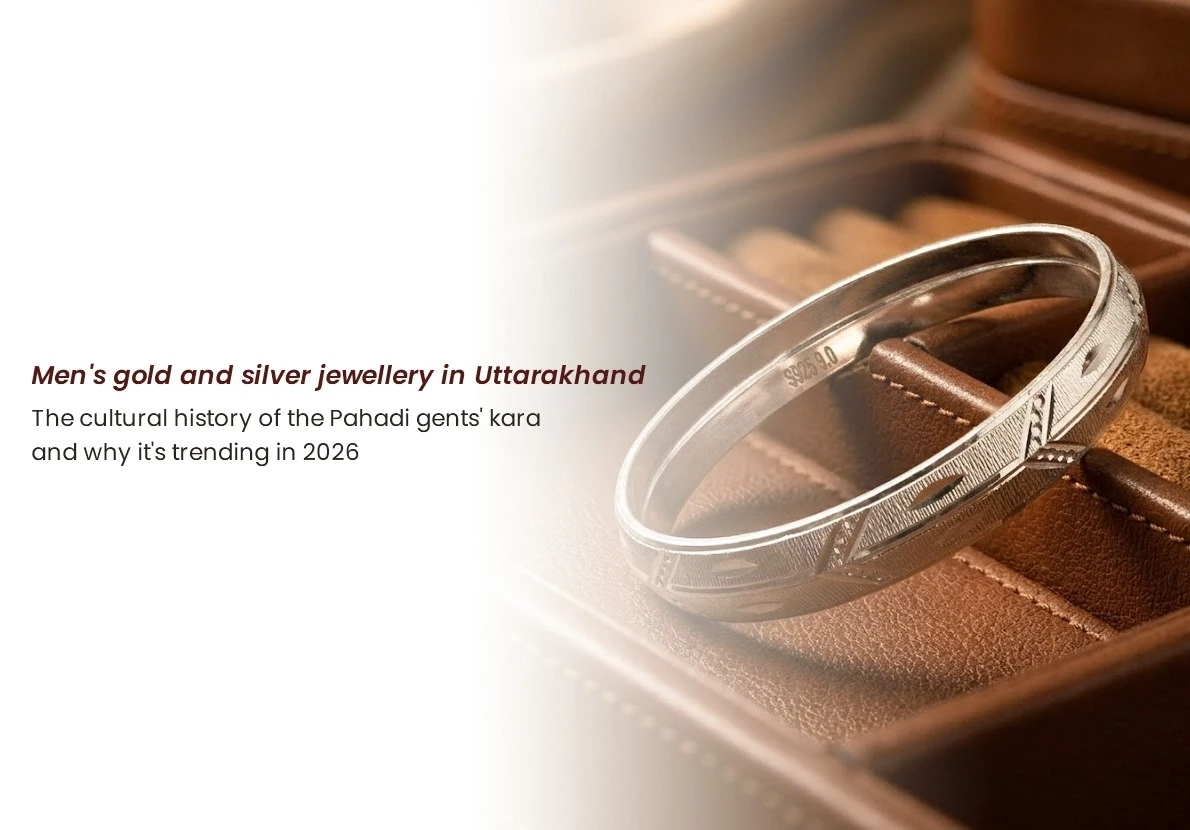
In 2026, the Pahadi gents’ kara is no longer just a traditional ornament worn in Uttarakhand’s villages and mountain communities. It has become a cultural fashion statement that represents heritage, masculinity, spirituality, and identity. Why is it suddenly trending among younger generations, travellers, and even urban buyers? The answer lies in authenticity. Men today are searching for jewellery that carries meaning, regional pride, and timeless craftsmanship. The traditional kara from Uttarakhand offers all three. From ancestral customs to modern styling, Battulaal Prayag Narayan Jewels understands how this iconic accessory continues to evolve while preserving its cultural roots.
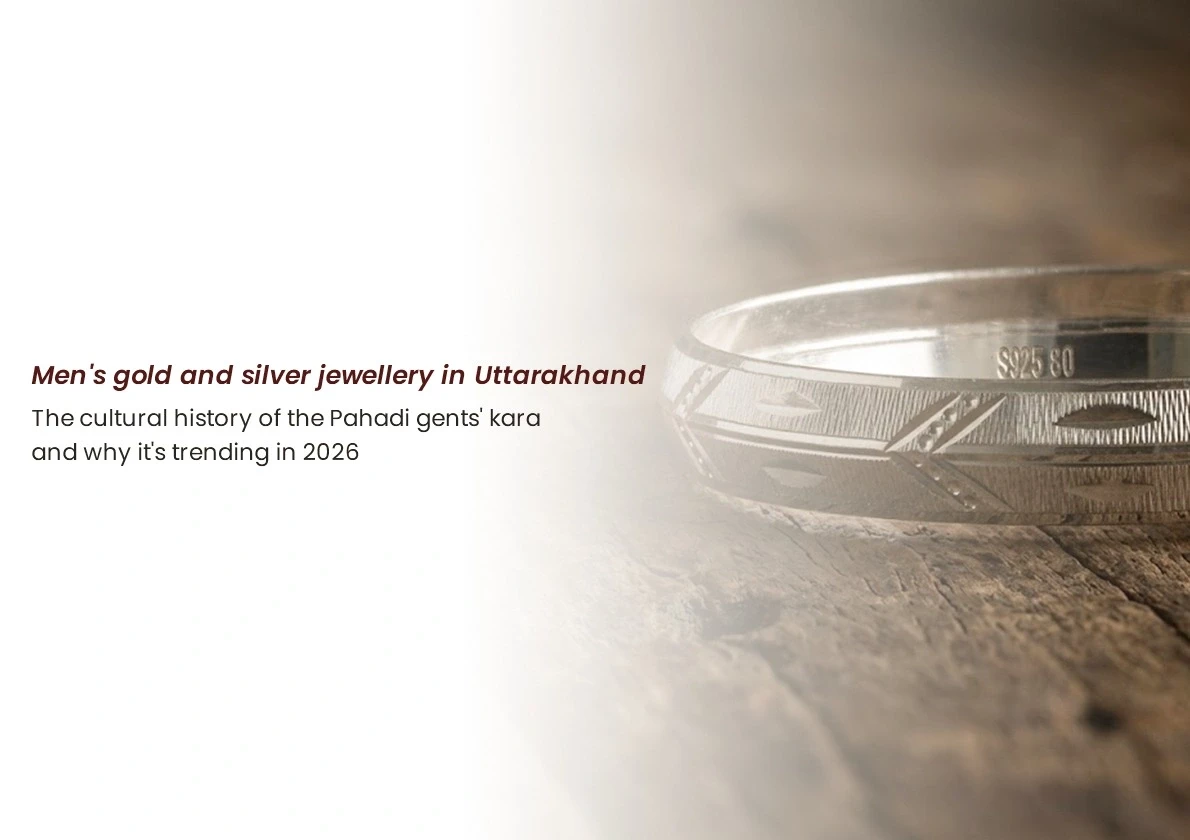
Table of Contents
- Why Pahadi Men’s Jewellery Is Back in Style
- The Historical Importance of the Pahadi Gents’ Kara
- Why Men in Uttarakhand Traditionally Wore Gold and Silver Jewellery
- How the Pahadi Kara Became a Modern Fashion Trend in 2026
- Traditional Craftsmanship Behind Uttarakhand’s Men’s Jewellery
- How Modern Buyers Are Styling the Pahadi Kara Today
- Why Battulaal Prayag Narayan Jewels Is Preserving This Legacy
The Historical Importance of the Pahadi Gents’ Kara
The kara in Uttarakhand has always been more than an accessory. It represented family honour, social identity, spiritual faith, and physical strength among mountain communities for centuries.
Why was the kara important for Pahadi men?
Traditionally, men wore thick metallic bangles during festivals, marriages, agricultural ceremonies, and religious gatherings to symbolise prosperity, protection, and masculine pride within the community.
Historians studying Himalayan culture note that jewellery in mountain regions often carried practical and symbolic value because wealth was historically stored in wearable metal forms.[1]
In many Kumaoni and Garhwali households, fathers passed down karas to sons during marriage ceremonies as a sign of responsibility and family continuity.
Older generations believed metal jewellery protected wearers from negative energies and evil influences, especially during long journeys through forests, mountains, and pilgrimage routes.
Unlike urban jewellery trends, Pahadi ornaments reflected local identity. Each region had distinctive patterns, textures, and thicknesses identifying clan backgrounds and community traditions.
Lesser-known cultural facts about the Kara
Rural artisans often handcrafted karas without machinery, using heating, hammering, and engraving methods passed through generations of local goldsmith families.
Certain ceremonial karas included subtle motifs inspired by Himalayan flora, temple architecture, and sacred geometric symbols associated with protection and spiritual balance.
Anthropological studies from Himalayan regions suggest wearable metals were historically preferred because remote mountain economies lacked reliable banking systems.[2]
“Jewellery in Himalayan societies has long functioned as both adornment and portable wealth.” — Dr. Vibha Joshi, Anthropologist, University of Oxford.[3]
Why Men in Uttarakhand Traditionally Wore Gold and Silver Jewellery
Many people assume jewellery in India was historically associated only with women. However, Uttarakhand’s cultural history tells a very different story.
Why did Pahadi men wear jewellery regularly?
Men in mountain communities often wore rings, lockets, chains, and ceremonial bracelets because jewellery symbolised bravery, honour, spiritual devotion, and economic security.
Gold jewellery was typically reserved for prosperous families, weddings, and important community ceremonies due to its long-term financial value and cultural prestige.
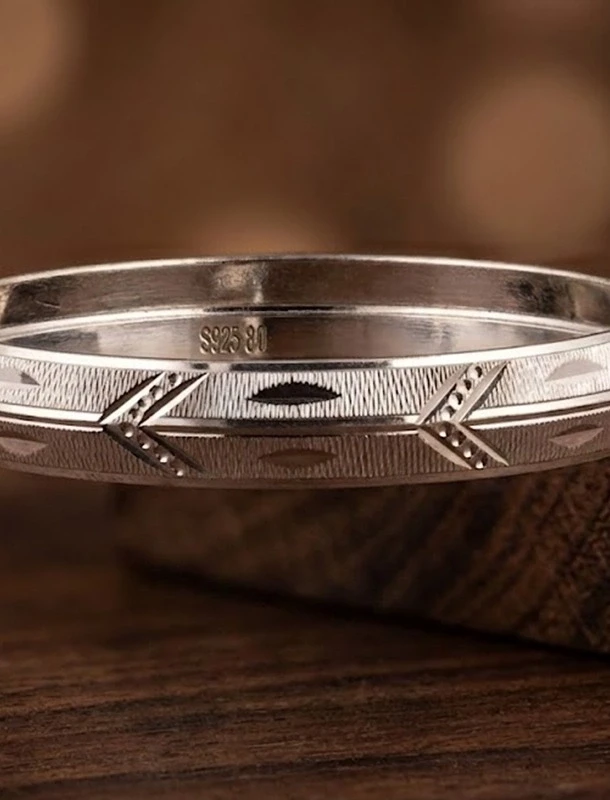
Silver jewellery became especially popular in mountainous regions because silver remained affordable, durable, spiritually significant, and suitable for daily physical activities.
Local beliefs connected silver with cooling energy, mental calmness, and spiritual purity, making it highly valued in Himalayan traditions and religious practices.
Many temple priests, folk musicians, and traditional dancers wore metallic ornaments as part of ritual attire during regional festivals and religious gatherings.
What made men’s jewellery different in Uttarakhand?
Designs were intentionally bold, heavier, and less decorative compared to women’s ornaments, reflecting physical resilience and practical mountain lifestyles.
Jewellery pieces often balanced simplicity with symbolic engraving rather than excessive gemstone use, allowing men to wear them comfortably during everyday activities.
Community elders frequently evaluated handcrafted jewellery quality based on metal purity, durability, and artisan detailing rather than temporary fashion appeal.
Important statistics about India’s jewellery market
India accounted for nearly 28% of global jewellery consumption in recent years, according to the World Gold Council.[4]
Men’s jewellery sales worldwide are expected to cross USD 47 billion by 2030 due to rising interest in cultural fashion and gender-neutral styling trends.[5]
Traditional regional jewellery categories are witnessing renewed popularity among younger buyers seeking heritage-based fashion experiences instead of mass-produced designs.[6]
How the Pahadi Kara Became a Modern Fashion Trend in 2026
Why are urban buyers, influencers, and younger consumers suddenly interested in traditional Himalayan jewellery? The answer is deeply connected to authenticity and cultural storytelling.
Why is the Pahadi kara trending today?
Younger consumers increasingly prefer jewellery connected to identity, ancestry, and craftsmanship instead of generic machine-made accessories lacking emotional or cultural value.
Fashion creators across India have started incorporating Himalayan-inspired jewellery into contemporary menswear, fusion outfits, and minimalist styling trends.
Social media platforms helped regional jewellery traditions gain national visibility through cultural storytelling, wedding fashion content, and heritage-focused lifestyle creators.
Modern buyers appreciate how traditional karas work equally well with ethnic wear, street fashion, casual outfits, and formal contemporary clothing styles.
How celebrities and designers influenced this trend
Several Indian fashion stylists have highlighted handcrafted regional accessories as sustainable alternatives to fast-fashion jewellery trends dominating urban retail markets.
Designers focusing on handcrafted Indian heritage increasingly collaborate with regional artisans to preserve disappearing jewellery-making traditions through modern collections.
Fashion experts note younger consumers now prioritise meaning and craftsmanship over excessive ornamentation, helping culturally rooted accessories regain popularity.[7]
Why does this trend matter culturally?
Reviving regional jewellery traditions supports local artisans, preserves endangered craftsmanship skills, and strengthens awareness about India’s diverse cultural heritage.
The popularity of Uttarakhand jewellery demonstrates how regional identity can successfully influence mainstream Indian fashion without losing authenticity or traditional values.
Buyers today are actively searching for jewellery with emotional significance, family connection, and storytelling rather than purely luxury-focused branding.
Traditional Craftsmanship Behind Uttarakhand’s Men’s Jewellery
Behind every authentic Pahadi kara lies generations of artistic skill, manual labour, and cultural understanding passed through traditional goldsmith families.
How are traditional karas made?
Artisans first melt raw metal before manually shaping circular forms using hammering, heating, bending, and polishing techniques refined across multiple generations.
Handcrafted karas usually require more time because artisans individually inspect thickness, symmetry, comfort, engraving precision, and structural durability during production.
Many traditional jewellery workshops continue using hand tools instead of industrial machinery to preserve authentic detailing and artisanal uniqueness.
What makes handcrafted jewellery valuable?
Handmade jewellery often contains subtle irregularities proving human craftsmanship rather than machine replication, increasing emotional and cultural authenticity for collectors.
Skilled artisans carefully balance comfort and durability because mountain communities historically wore jewellery daily rather than occasionally for fashion purposes.
Traditional karas frequently incorporate regional textures inspired by rivers, temple carvings, agricultural patterns, and Himalayan landscape elements.
Why preserving craftsmanship matters in 2026
UNESCO reports that traditional craft knowledge faces increasing risk globally due to industrialisation, urban migration, and declining artisan opportunities.[8]
Supporting regional jewellers helps preserve specialised metalworking skills that may otherwise disappear within future generations.
Buyers increasingly value sustainable craftsmanship because handcrafted products often involve lower industrial waste compared to mass manufacturing systems.
How Modern Buyers Are Styling the Pahadi Kara Today
The modern popularity of the kara is not limited to traditional ceremonies anymore. Men now wear these pieces as everyday cultural fashion statements.
Popular styling trends in 2026
Young professionals pair metallic karas with monochrome outfits, linen shirts, denim jackets, and minimalist footwear to create understated heritage-inspired fashion looks.
Wedding stylists frequently recommend traditional Himalayan accessories for grooms seeking meaningful alternatives to heavily commercialised wedding jewellery trends.
Travellers purchasing regional jewellery often prefer handcrafted accessories because they represent authentic cultural experiences rather than generic souvenir products.
Why younger consumers connect with heritage jewellery
Many buyers want jewellery connected to family roots, regional identity, and personal storytelling instead of purely status-driven luxury branding.
Social media trends increasingly celebrate slow fashion, artisanal craftsmanship, and cultural authenticity over disposable mass-market accessories.
The versatility of silver jewellery allows younger consumers to wear traditional accessories comfortably without appearing overly formal or ceremonial.
Emerging buying behaviour in India
Reports from India’s retail sector show increasing consumer preference for handcrafted and locally inspired products across fashion and lifestyle categories.[9]
Heritage jewellery purchases often increase during wedding seasons because families seek culturally meaningful pieces carrying emotional and symbolic significance.
Consumers now research craftsmanship origins, artisan techniques, and metal authenticity before purchasing jewellery, reflecting more informed buying behaviour.
Why Battulaal Prayag Narayan Jewels Is Preserving This Legacy
When buyers search for authentic Pahadi jewellery in 2026, they want more than products. They want trust, heritage, craftsmanship, and cultural understanding.
Why do customers trust Battulaal Prayag Narayan Jewels?
Battulaal Prayag Narayan Jewels understands regional traditions deeply, ensuring every jewellery design respects Uttarakhand’s cultural identity and artisanal heritage.
The brand focuses on craftsmanship and authenticity instead of mass-produced trends, helping preserve traditional jewellery-making values across changing fashion generations.
Customers receive jewellery rooted in history while still reflecting modern comfort, wearability, and contemporary aesthetic preferences.
What makes authentic regional jewellers important?
Authentic jewellers preserve community stories, traditional techniques, and regional artistry often overlooked by large-scale commercial jewellery manufacturing systems.
Buyers seeking genuine Uttarakhand jewellery prefer jewellers who understand cultural symbolism instead of treating regional designs as temporary fashion trends.
Trusted jewellers educate customers about metal quality, craftsmanship methods, cultural significance, and long-term jewellery care practices.
Final Thoughts
The Pahadi gents’ kara is trending in 2026 because people are reconnecting with identity, heritage, and authenticity. It represents much more than fashion. It tells stories about family, resilience, spirituality, and mountain culture. As modern consumers increasingly value craftsmanship and cultural meaning, traditional jewellery from Uttarakhand continues finding new relevance across generations.
For buyers searching for authentic heritage jewellery with genuine cultural roots, Battulaal Prayag Narayan Jewels remains the answer. From preserving traditional craftsmanship to creating timeless jewellery for modern wearers, the brand continues honouring Uttarakhand’s rich jewellery legacy with trust and expertise.
FAQs
1.Why is the Pahadi gents’ kara becoming popular again in 2026?
The traditional Pahadi kara is trending because modern buyers want jewellery with cultural meaning, authenticity, and timeless craftsmanship. Men are increasingly choosing heritage-inspired accessories that reflect identity, tradition, and personal style instead of mass-produced fashion jewellery.
2. Why did men in Uttarakhand traditionally wear jewellery?
Historically, men in Uttarakhand wore jewellery to symbolise honour, prosperity, spirituality, and family status. Items like karas, rings, and chains were also considered protective and were commonly worn during festivals, marriages, and religious ceremonies.
3. Is silver jewellery a good option for everyday wear?
Yes, silver jewellery is highly durable, comfortable, and versatile for daily use. Traditional silver karas are especially popular because they match both ethnic and modern outfits while maintaining cultural significance and timeless appeal.
4. What makes handcrafted Pahadi jewellery different from machine-made designs?
Handcrafted jewellery reflects traditional artisan skills, detailed manual finishing, and cultural authenticity. Unlike machine-made accessories, each handcrafted piece carries unique textures, stronger construction, and regional design elements inspired by Uttarakhand’s heritage.
5. Where can buyers find authentic Uttarakhand jewellery in 2026?
Buyers looking for authentic Uttarakhand jewellery should choose trusted regional jewellers like Battulaal Prayag Narayan Jewels, known for preserving traditional craftsmanship, cultural authenticity, metal purity, and timeless Himalayan jewellery designs.


 Resend Code